
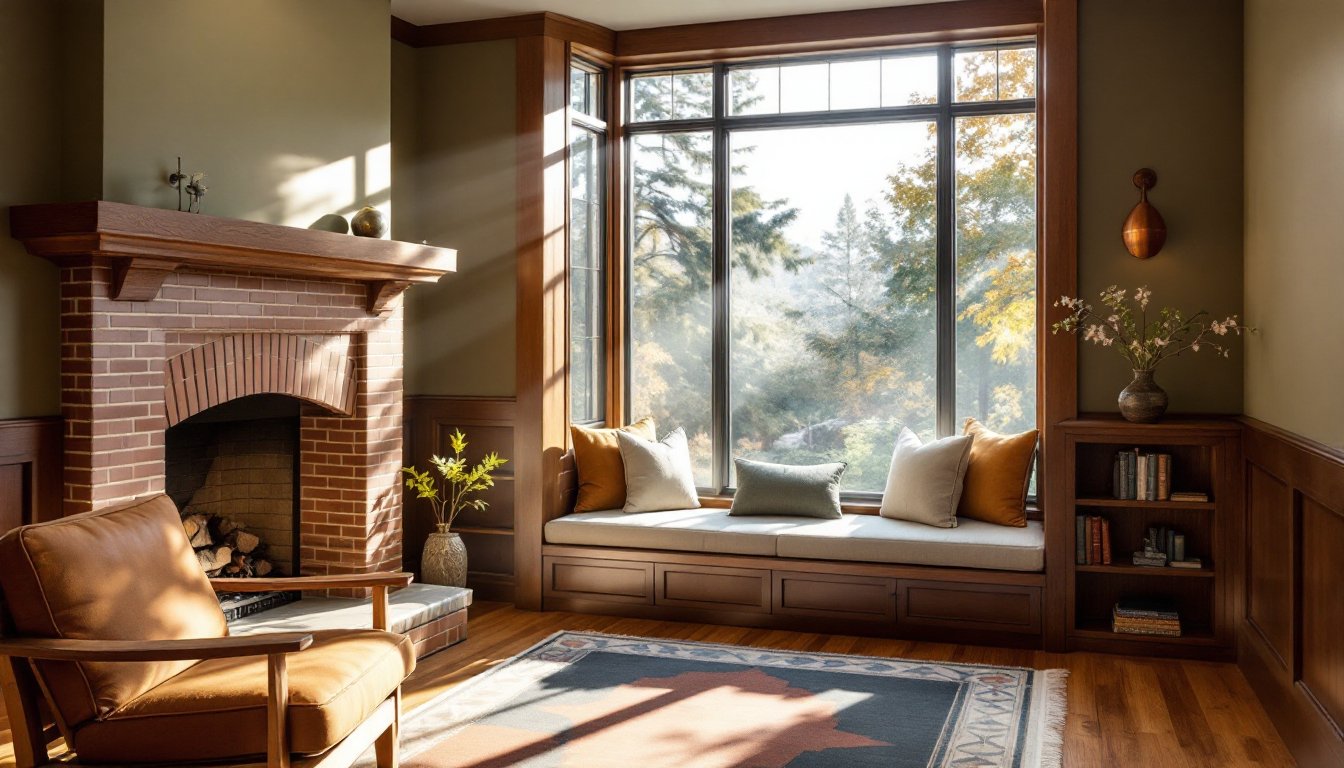

Arts and Crafts interior design isn’t about mimicking a museum, it’s about bringing warmth, authenticity, and craftsmanship into everyday spaces. Born as a reaction to mass production in the late 19th century, this style celebrates handmade details, natural materials, and functional beauty. Unlike trends that fade with the seasons, Arts and Crafts design has staying power because it prioritizes honest construction and timeless appeal. Homeowners drawn to wood grain, built-in cabinetry, and earthy color schemes will find this style surprisingly adaptable to modern living. Whether restoring a period home or simply adding character to a builder-grade space, understanding the fundamentals makes all the difference.
Key Takeaways
- Arts and Crafts interior design celebrates honest construction and handcrafted details with natural materials like quartersawn white oak, avoiding mass-produced and ornately decorated elements.
- Authentic Arts and Crafts color palettes draw from nature, featuring forest greens, warm ochres, russet reds, and earthy tones that complement rather than compete with prominent woodwork.
- Incorporate Arts and Crafts elements through architectural woodwork, built-in cabinetry, mission-style furniture with exposed joinery, and period-appropriate lighting with geometric leaded glass or mica shades.
- Mission-style furniture emphasizes straight lines, visible structural joinery, and minimal ornamentation, prioritizing quality craftsmanship over applied cosmetic details.
- Modern homes can adapt Arts and Crafts principles by using ceiling beams to define spaces, choosing panel-ready appliances and oil-rubbed bronze hardware, and balancing authenticity with contemporary needs like open floor plans.
- Address safety and code compliance before cosmetic restoration work, as older Arts and Crafts homes often contain knob-and-tube wiring, asbestos, or lead paint requiring professional remediation.
What Is Arts and Crafts Interior Design?
Arts and Crafts interior design emerged in Britain during the 1880s and gained traction in the United States through the early 1900s, particularly via the American Craftsman movement. The style was a deliberate pushback against ornate Victorian excess and the soulless repetition of industrial manufacturing. Architects and designers like William Morris, Gustav Stickley, and Greene & Greene championed the idea that homes should feature visible joinery, handcrafted elements, and materials left in their natural state.
The philosophy centers on honest construction, no veneers hiding cheap substrates, no applied ornament disguising poor workmanship. Exposed mortise-and-tenon joints, through-tenons with wedges, and hand-hammered hardware aren’t just decorative: they’re structural elements celebrated as part of the design. This approach creates interiors that feel grounded and substantial.
Arts and Crafts homes often feature built-in furniture, including window seats, bookcases, and inglenook benches. Woodwork is prominent: quartersawn white oak is the material of choice for trim, cabinetry, and furniture, prized for its straight grain and ray fleck figure. Finishes tend toward medium to dark stains that emphasize the wood’s natural character rather than obscuring it. The overall effect is cozy without being cluttered, refined without feeling formal.
Key Characteristics of Arts and Crafts Style
Natural Materials and Handcrafted Details
Authentic Arts and Crafts interiors rely on materials that age gracefully and show the hand of the maker. Quartersawn oak dominates trim and furniture, but other hardwoods like cherry, maple, and mahogany also appear. The quartersawing process yields boards with vertical grain patterns and distinctive medullary rays, those shimmering flecks that catch light differently than plain-sawn lumber.
Stone and brick feature prominently in fireplaces, often left unfinished or lightly mortared to highlight texture. Clinker brick, over-fired bricks with irregular surfaces and varied colors, adds visual interest to hearths and accents. For flooring, white oak or reclaimed heart pine planks in wider widths (4 to 6 inches) maintain the natural aesthetic. Avoid overly distressed or wire-brushed finishes marketed as “rustic”: period-appropriate floors were typically sanded smooth and finished with oil or shellac.
Handcrafted details matter. Hardware should be hand-forged or cast iron with visible hammer marks or patina, not polished chrome or brushed nickel. Lighting fixtures often feature mica or slag glass in warm amber tones, set in copper or bronze frames. Cabinet hinges, door pulls, and escutcheons become small sculptural moments rather than afterthoughts.
Warm Color Palettes and Earthy Tones
Arts and Crafts color schemes draw directly from nature. Think forest greens, warm ochres, russet reds, and deep browns, colors found in autumn leaves, clay, and aged wood. Walls often feature flat or matte paint finishes in muted tones that complement rather than compete with woodwork. Popular choices include sage green, Craftsman brown, mustard yellow, and terracotta.
Avoid stark white trim, which didn’t become standard until mid-century modernism. Instead, woodwork is typically stained to show grain or painted in colors that harmonize with wall tones. Wainscoting and picture rails in dark-stained oak create strong horizontal lines that anchor rooms visually.
Textiles reinforce the palette: wool rugs in geometric patterns inspired by Arts and Crafts designers like Voysey or Morris, linen curtains in natural tones, and leather upholstery on seating. Avoid synthetic fabrics and overly busy prints, simplicity and natural fiber content align with the movement’s values.
How to Incorporate Arts and Crafts Elements Into Your Home
Start with architectural woodwork. Adding or restoring crown molding, baseboards, and door casings in quartersawn oak (or oak-veneer plywood for budget builds) immediately shifts a room’s character. Standard lumberyards stock red oak more commonly than white oak, but white oak’s tighter grain and historical accuracy justify the search. Expect to pay 20–40% more than red oak, depending on regional availability.
Built-in cabinetry offers both function and authenticity. A window seat with flanking bookcases, a plate rail in the dining room, or a bench with cubbies in an entry hall all reference period design. If custom millwork isn’t in the budget, freestanding Craftsman-style furniture achieves similar impact. Look for pieces with visible joinery, through-tenons, and corbels (the small brackets supporting overhanging elements).
Replace builder-grade doors with five-panel or three-panel Craftsman doors featuring vertical orientation and flat (not raised) panels. Interior doors in this style are widely available as prehung units in both solid wood and hollow-core versions: solid doors have better heft and sound dampening but require beefier hinges.
Lighting is critical. Swap generic fixtures for Arts and Crafts-inspired pendants and sconces with geometric leaded glass or mica shades. Manufacturers like Rejuvenation and Schoolhouse Electric offer reproduction fixtures, though vintage originals can be found through architectural salvage dealers. Ensure any vintage electrical components are rewired to meet current NEC (National Electrical Code) standards, old cloth wiring and ungrounded sockets are fire hazards.
Fireplace mantels and surrounds provide a focal point. A simple box beam mantel in quartersawn oak with corbel supports and Batchelder-style tile (low-relief, matte-glazed ceramic in earthy tones) on the surround captures the aesthetic without heavy ornamentation. If renovating an existing fireplace, consider engaging a tile setter experienced with historic reproductions, layout and grout width matter for visual authenticity.
Furniture and Fixtures That Define the Style
Mission-style furniture, often used interchangeably with Arts and Crafts furniture, emphasizes straight lines, slab sides, and minimal ornamentation. Chairs and settles feature vertical slats in the back, a motif borrowed from ladder-back designs but refined with consistent spacing and proportions. Tables often have lower shelves or stretchers positioned close to the floor, offering both structural support and display space.
Look for exposed joinery: pegged mortise-and-tenon joints, dovetails on drawer fronts, and through-tenons on chair arms and table aprons. These aren’t cosmetic add-ons, they’re how the piece is actually assembled. Reproductions that mimic the look with applied dowels or false tenons miss the point.
Gustav Stickley and L. & J.G. Stickley remain the gold standard for American Craftsman furniture. Original pieces command high prices, but licensed reproductions and contemporary makers working in the tradition offer quality alternatives. When shopping, check that quartersawn white oak is specified, not plain-sawn red oak stained to approximate the color. The grain figure is visibly different.
For upholstered seating, leather is period-appropriate, typically in brown or tobacco tones, though heavy canvas or linen also works. Springs should be eight-way hand-tied if authenticity matters: budget pieces use sinuous (zigzag) springs, which are functional but less traditional.
Built-in benches and inglenooks (cozy recessed seating areas near the fireplace) require framing into the wall structure. This is straightforward in new construction or major renovations but can involve opening walls and modifying studs in existing homes. If load-bearing walls are involved, consult a structural engineer or contractor familiar with IRC (International Residential Code) requirements for headers and supports.
Hardware and hinges should be wrought iron or oil-rubbed bronze, with visible texture and hand-forged character. Avoid anything too shiny or machined-looking. Cabinet latches, door handles, and drawer pulls are available from specialty suppliers: mixing modern and period hardware creates visual confusion, so commit to one direction.
Creating an Arts and Crafts Living Space Today
Adapting Arts and Crafts principles to contemporary homes means balancing authenticity with modern needs. Open floor plans conflict with the cozier, compartmentalized layouts typical of period homes, but ceiling beams, half-walls, and changes in flooring material can define zones without erecting full partitions.
Kitchens present a challenge, early 20th-century kitchens were utilitarian workspaces, not showpieces. Today’s approach often involves Shaker-style cabinetry in quartersawn oak with inset doors and simple pulls, paired with soapstone or honed granite countertops that echo natural stone. Stainless appliances read as too industrial: panel-ready refrigerators and ranges in matte black or slate finishes blend better.
Bathrooms weren’t a major design focus historically, but subway tile, pedestal sinks, and clawfoot tubs nod to the era without strict replication. Use white or cream subway tile with dark grout for contrast, and choose fixtures in oil-rubbed bronze or matte black rather than chrome.
Window treatments should be simple: linen or cotton curtains on iron rods, or wooden blinds. Avoid fussy swags and valances. If privacy and light control are priorities, cellular shades in neutral tones offer modern function without visual clash, mount them inside the casing so woodwork remains visible.
Paint and stain choices matter more than homeowners often realize. Period-appropriate finishes were shellac or oil-based, which produce a hand-rubbed glow impossible with modern polyurethane. Water-based poly is more user-friendly and lower in VOCs, but it dries clear rather than amber, shifting the wood’s tone cooler. For trim and built-ins, consider tung oil or Danish oil applied in multiple thin coats, it requires more labor but yields the soft luster associated with the style.
Don’t overlook safety and code compliance, especially in older homes undergoing restoration. Knob-and-tube wiring, ungrounded outlets, asbestos in plaster, and lead paint are common in houses from the Arts and Crafts era. Address these before cosmetic work begins. Permits are typically required for electrical, plumbing, and structural modifications: trying to skip inspections creates liability and resale headaches.
Finally, resist the urge to over-theme. A few well-chosen pieces, a Morris chair, a Stickley-style dining table, a tile-surround fireplace, go further than filling every corner with reproduction accessories. The Arts and Crafts movement valued restraint, functionality, and respect for materials. Honor that philosophy, and the space will feel cohesive rather than like a stage set.