

Interior design on a budget isn’t about compromising on style, it’s about getting strategic with resources. With material costs staying high in 2026 and inflation still pinching wallets, homeowners are discovering that thoughtful, low-cost updates can rival pricey renovations in impact. The difference between a dated room and a refreshed one often comes down to paint, placement, and perspective, not a maxed-out credit card. This guide covers practical, low-cost interior design ideas that deliver real visual change without the designer price tag.
Key Takeaways
- Low-cost interior design relies on creativity and strategic planning rather than large budgets—start by repurposing items already in your home before spending any money.
- Paint is the highest-impact, lowest-cost upgrade available, with a gallon covering 350–400 square feet for just $30–$60, and accent walls or ceiling transformations creating drama without overwhelming expenses.
- Thrift stores and online marketplaces offer quality secondhand furniture at fractions of retail prices if you know how to evaluate structural soundness and timing your shopping.
- DIY projects like board and batten walls, custom curtain rods from electrical conduit, and floating shelves deliver high visual impact for under $100 per project.
- Strategic furniture arrangement—floating pieces away from walls, proper rug placement, and layered lighting—transforms room functionality and perceived space at zero cost.
- Affordable accessories like throw pillows, plants, artwork from online marketplaces, and hardware updates complete designed spaces while maintaining budget-friendly low-cost interior design principles.
Shop Your Home First: The Zero-Dollar Decorating Strategy
Before spending a dime, homeowners should assess what they already own. Most homes contain underutilized furniture, forgotten artwork, and accessories collecting dust in closets or basements. Moving these pieces to new locations creates fresh arrangements without any expense.
Start by removing everything from shelves, walls, and surfaces in the target room. Wipe down surfaces and evaluate each item with fresh eyes. Items that feel stale in one room often shine in another context, a bedroom lamp might anchor a reading nook, while kitchen canisters could organize a bathroom counter.
Rotation strategy works particularly well with seasonal items. Swap throw pillows, blankets, and lightweight decor between rooms every few months. This keeps spaces feeling current without constant purchases. A vase gathering dust in a guest room might become the focal point on a dining table.
Repurposing furniture adds function and visual interest. An old dresser works as a TV stand or entryway console. Bookshelves turned on their sides create low credenzas or window seats with added cushions. Kitchen chairs painted different colors become eclectic dining seating or desk chairs in a home office.
Grouping small accessories into vignettes creates more impact than scattering them around. Three candlesticks of varying heights on a tray, a stack of books topped with a small plant, or clustered picture frames make intentional statements versus random clutter.
Paint Power: Budget-Friendly Color Transformations
Paint remains the single highest-impact, lowest-cost interior upgrade available. A gallon of quality interior paint covers approximately 350-400 square feet and costs between $30-$60 depending on brand and finish. For most standard rooms, two gallons handle walls with enough left for touch-ups.
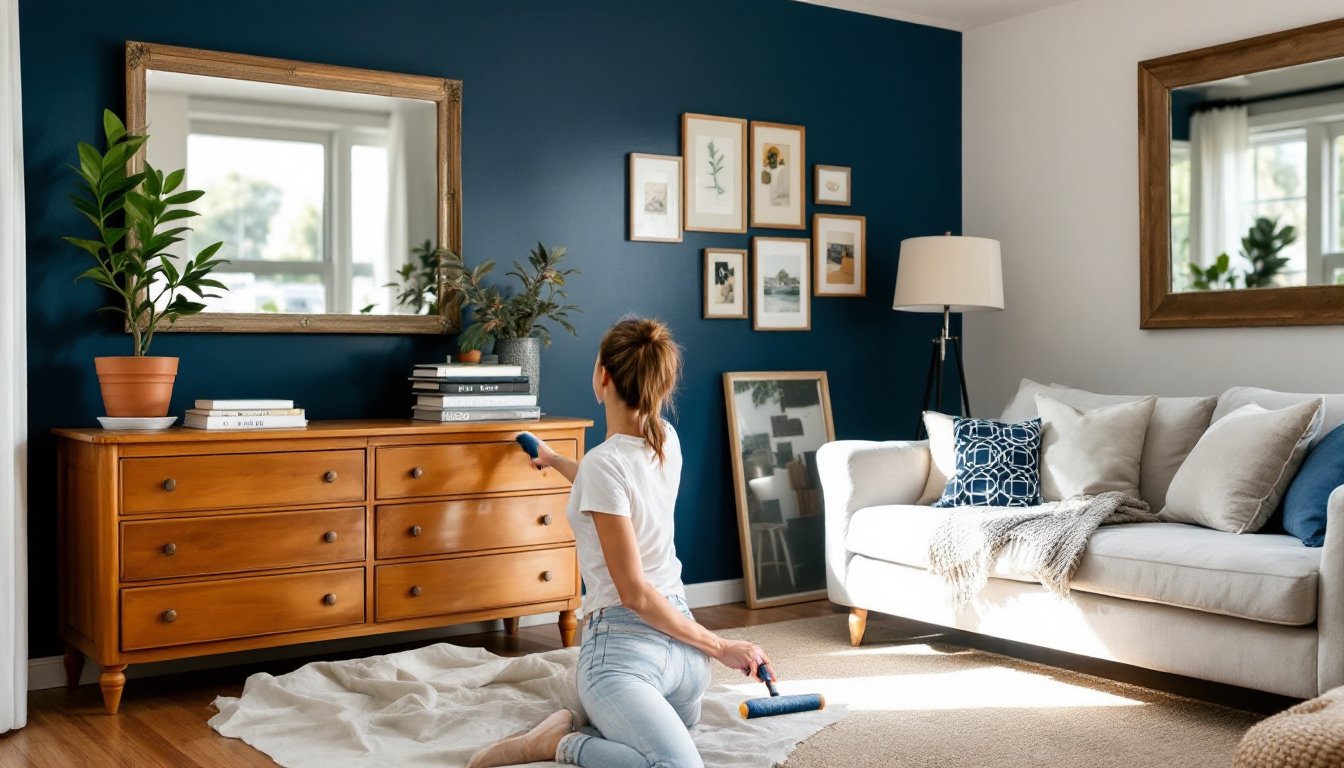
Accent walls deliver drama without overwhelming a space or a budget. Painting one wall in a bold color, deep navy, forest green, or terracotta, creates a focal point while using minimal paint. This works especially well behind beds, sofas, or in dining areas. Homeowners should choose the wall that naturally draws the eye when entering the room.
Ceiling paint gets overlooked but transforms room proportions. Light ceilings make rooms feel taller: darker ceilings add coziness to large spaces. A soft blue or pale gray ceiling adds unexpected interest in bedrooms or bathrooms. Standard ceiling paint costs slightly less than wall paint and requires less precision since trim lines are forgiving.
Trim and door updates create polish. Painting all interior doors a uniform color, whether crisp white, soft black, or matching the trim, unifies a home’s look. Outdated honey-oak trim painted white or a modern gray freshens entire spaces. Use semi-gloss or satin finish for trim and doors since they’re more durable and cleanable than flat paint.
Safety note: Always ventilate work areas properly. Wear a respirator mask (not just a dust mask) when painting, especially with oil-based primers. Protect floors with canvas drop cloths, plastic ones get slippery and don’t absorb drips.
Color selection matters. Test paint samples on poster board (cheaper than painting directly on walls) and observe them at different times of day. Northern light reads cool and blue: southern light tends warm and yellow. These shifts affect how colors appear in real living conditions.
Thrift Store and Secondhand Shopping Secrets
Thrift stores, estate sales, and online marketplaces offer quality furnishings at fractions of retail prices, if shoppers know what to look for. Solid wood furniture from the 1960s-1980s often outlasts modern particle board pieces and costs less secondhand than new budget furniture.
Structural soundness beats surface appearance. Scratched wood refinishes easily: wobbly joints don’t. Check drawer construction, dovetail joints indicate quality. Sit on chairs and open all drawers. Avoid upholstered pieces with musty smells (nearly impossible to eliminate) or visible stains on cushion cores.
Mid-century and vintage frames offer character modern frames lack. A $5 estate sale frame with good bones transforms with spray paint. Remove glass, mask off backing hardware, and apply thin coats of oil-rubbed bronze, matte black, or metallic gold spray paint in a well-ventilated area. Let cure for 48 hours before handling.
Facebook Marketplace and Craigslist require patience but yield results. Search terms like “moving sale,” “must go,” or specific furniture types. Bring cash, measuring tape, and a friend for loading. Never meet sellers alone, choose public locations or bring someone along for home pickups.
Timing matters. Thrift stores often restock weekday mornings. Estate sales price aggressively on final days (usually Sundays). College towns see inventory surges in May and August when students move.
Negotiation is expected at estate sales and online marketplaces. Offering 20-30% below asking price for furniture is standard. Point out specific flaws or repairs needed to justify lower offers. Cash in hand often seals deals.
DIY Decor Projects That Look Expensive
Certain DIY projects deliver high visual impact relative to their material costs and skill requirements. These projects look custom without requiring advanced carpentry or large budgets.
Board and batten walls add architectural interest for under $100 in most rooms. Using 1×4 boards (actual dimensions: 3/4″ × 3-1/2″) spaced evenly on painted walls creates dimension. Materials include boards, construction adhesive, a finish nailer or nail gun, wood filler, caulk, and paint. Measure wall height, cut boards to length, space them 12-16 inches apart vertically, secure with adhesive and nails, fill holes, caulk seams, and paint everything one cohesive color.
Custom curtain rods cost a fraction of designer versions. Use 3/4-inch electrical conduit (actual metallic tubing from hardware stores) cut to window width plus 6-8 inches overhang on each side. Spray paint with metallic or matte black finish. Mount with conduit hangers or simple wall brackets. Total cost runs $15-25 per window versus $60-150 for similar retail rods.
Peel-and-stick wallpaper transforms accent walls, stair risers, or furniture backs without commitment. Quality removable wallpaper costs $30-50 per roll (covers about 28 square feet). It removes cleanly from most painted surfaces, making it renter-friendly. Apply to smooth, clean walls for best adhesion, textured walls create air pockets.
Floating shelves from dimensional lumber look custom for under $20 each. Use 2×8 or 2×10 boards cut to desired length, sand smooth, stain or paint, and mount with heavy-duty floating shelf brackets rated for the intended load. Each shelf holds 30-50 pounds depending on bracket quality and wall anchoring.
Safety reminder: Use appropriate safety glasses when cutting lumber. Wear dust masks when sanding. Ensure floating shelves mount into wall studs (locate with a stud finder) or use proper drywall anchors rated for the load. Shelves mounted only to drywall will fail.
Strategic Furniture Arrangement and Space Planning
Furniture placement affects how a room functions and feels, yet costs nothing to adjust. Poor layouts make rooms feel cramped or awkward: thoughtful arrangements improve flow and perceived space.
Traffic patterns should allow 30-36 inches of walking clearance through main pathways. In living rooms, arrange seating to encourage conversation, chairs and sofas facing each other with a coffee table anchoring the grouping. Avoid pushing all furniture against walls, which creates a bowling alley effect. Floating furniture 8-12 inches from walls often makes rooms feel larger and more intentional.
Rug placement defines zones in open-plan spaces. In living areas, front furniture legs should rest on the rug while back legs can be off, this anchors the grouping. Undersized rugs make spaces feel disjointed. For dining areas, rugs should extend at least 24 inches beyond table edges on all sides so chairs remain on the rug when pulled out.
Scale and proportion matter more than matching sets. Mix furniture heights and sizes to create visual interest. A low-profile sofa pairs well with a tall bookshelf: chunky coffee tables balance delicate side chairs. Avoid cluttering small rooms with oversized furniture, one substantial piece works better than several medium ones competing for attention.
Lighting layering changes ambiance without expensive fixtures. Combine overhead lighting, task lighting (desk or reading lamps), and ambient lighting (floor lamps or sconces) to create depth. Using multiple light sources on dimmer switches allows flexibility for different activities and moods.
Mirrors strategically placed opposite windows reflect natural light and expand perceived space. Large mirrors lean against walls for flexibility, while smaller grouped mirrors create gallery walls. Avoid placing mirrors directly opposite busy or cluttered areas, they’ll amplify the chaos.
Affordable Accessories That Make a Big Impact
Accessories provide the finishing details that make designed spaces feel complete. These elements work best when chosen intentionally and scaled appropriately.
Textiles add warmth and color inexpensively. Throw pillows in varying patterns (one large-scale pattern, one geometric, one solid) create coordinated but not matchy looks. Standard 18×18-inch or 20×20-inch pillow inserts cost $5-10 each: covers run $8-20. Mixing textures, linen, velvet, cotton, adds depth.
Throw blankets draped over sofas or folded at bed ends introduce layers. Look for cotton, chunky knits, or faux fur in complementary colors. These items go on sale seasonally and provide easy updates when color schemes change.
Greenery brings life to interiors. Real plants improve air quality but require maintenance: high-quality faux plants now look convincing and need only occasional dusting. Snake plants, pothos, and ZZ plants tolerate low light and inconsistent watering, ideal for beginners. Pot plants in coordinating containers (ceramic, terracotta, or woven baskets) rather than plastic nursery pots.
Artwork doesn’t require gallery pricing. Printable art from online marketplaces costs $5-15 and can be framed in budget frames. Personal photography printed large-format at office supply stores (around $15-30 for 16×20-inch prints) becomes custom art. Gallery walls mix frame sizes and orientations, lay out arrangements on the floor before hammering nails.
Books styled on coffee tables, shelves, or nightstands add color and personality. Stack horizontally in groups of three, top with small objects, or arrange vertically by color for visual impact. Thrift stores sell hardcover books for $1-3 each.
Hardware updates breathe new life into existing furniture and cabinets. Replacing drawer pulls and cabinet knobs costs $2-8 per piece and takes minutes with a screwdriver. Choose finishes that coordinate with existing fixtures, brushed nickel, matte black, or brass.
Conclusion
Low-cost interior design leverages creativity, elbow grease, and strategic choices over big budgets. By shopping existing inventory, wielding a paintbrush, hunting secondhand treasures, tackling simple DIY projects, rethinking furniture placement, and choosing accessories wisely, homeowners create spaces that reflect personal style without financial strain. The best interiors aren’t about how much was spent, they’re about how thoughtfully resources were deployed.