
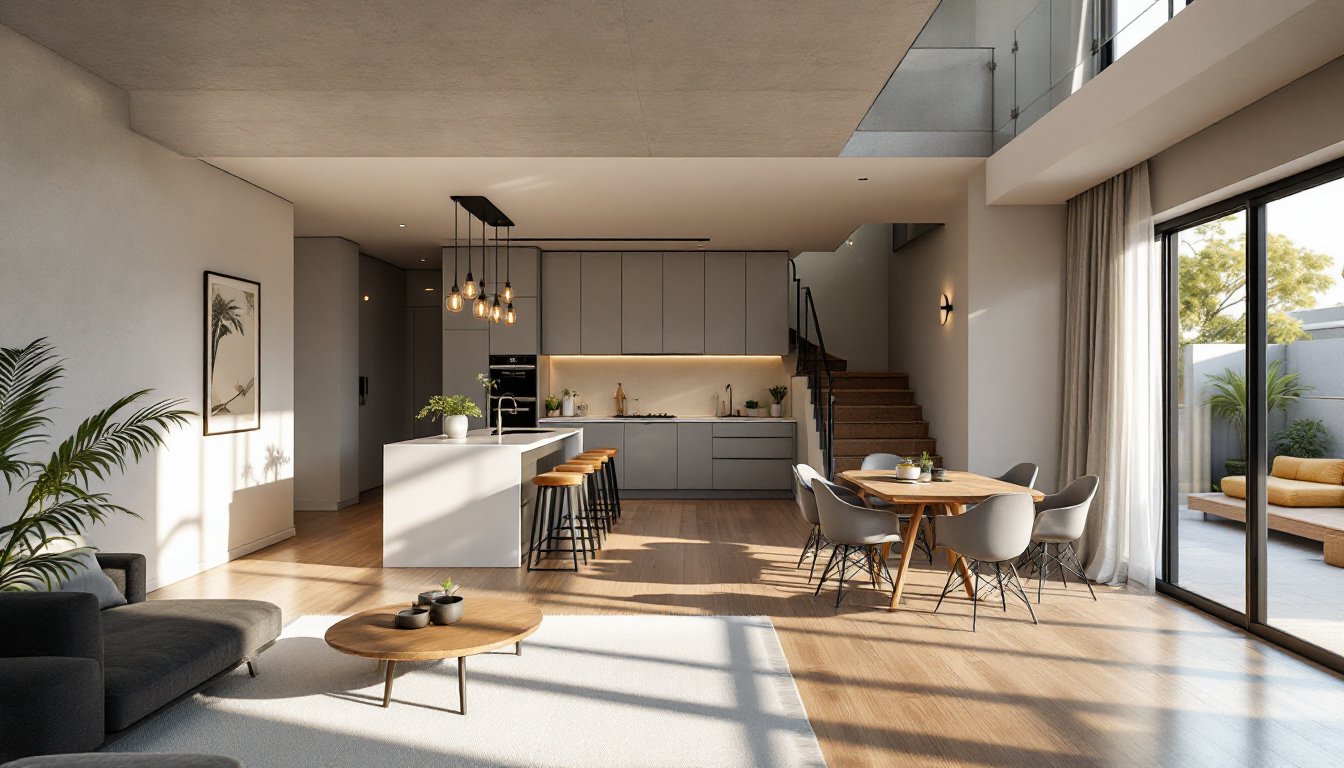

Landed houses offer something apartment dwellers can only dream about: actual control over walls, floors, ceilings, and entire room layouts. That freedom comes with complexity. Unlike condos with pre-set floor plans and HOA restrictions, landed properties demand thoughtful interior design that accounts for multiple levels, private outdoor spaces, and varying room scales. Homeowners face choices about spatial flow, natural light management, and how to make each zone feel intentional without sacrificing cohesion. This guide walks through the core principles, popular styles, and room-specific strategies that turn a landed house into a functional, beautiful home in 2026.
Key Takeaways
- Landed house interior design requires accounting for multi-level layouts, load-bearing walls, and direct outdoor connections—structural considerations that differ fundamentally from apartment design.
- Effective spatial flow combines open floor plans with purposeful zoning using flooring transitions, ceiling treatments, and furniture arrangement to create distinct functional areas without erecting walls.
- Modern styles for landed homes range from minimalist to tropical modern, with contemporary transitional and Scandinavian hygge being popular choices that balance timeless appeal with current aesthetics.
- Technical planning in kitchens, bathrooms, and bedrooms—such as work triangle guidelines, ceiling clearances, and moisture-resistant materials—ensures both functionality and durability.
- Smart home integration and sustainable solutions, including LED lighting, energy-efficient windows, and solar panels, enhance landed property value while reducing long-term utility costs.
What Makes Landed House Interior Design Unique?
Landed properties, detached houses, semi-detached homes, and townhouses, come with structural elements that shape design differently than high-rise units. Multi-level layouts introduce vertical circulation: staircases become focal points and potential bottlenecks if poorly planned. Unlike single-floor condos, landed homes require coordination across floors to maintain visual continuity and functional flow.
Direct ground access changes how spaces connect to the outdoors. Patios, gardens, and back entrances influence interior traffic patterns and material choices. Homeowners need transition zones (mudrooms, covered entryways) to manage dirt, moisture, and climate control, concerns less pressing in sealed apartment buildings.
Load-bearing walls and structural freedom vary widely. Some landed houses allow wall removal for open concepts: others have critical structural members that dictate room boundaries. Before any renovation, homeowners should consult structural engineers or architects. Removing the wrong wall risks ceiling sag, foundation shifts, or worse. Building codes (typically governed by the International Residential Code or local amendments) specify beam sizing, joist span limits, and permitting requirements for structural changes.
Ceiling height variability also sets landed homes apart. First floors often feature 9- to 10-foot ceilings, while upper levels sit at standard 8 feet. This difference affects lighting placement, paint color perception, and furniture scale. Designers must account for these shifts to avoid awkward proportions room-to-room.
Essential Design Principles for Landed Properties
Two principles govern successful landed house interiors: making space work harder and balancing communal areas with private retreats.
Maximizing Space and Flow
Circulation paths dictate how occupants move between rooms and floors. In a two-story landed house, the staircase location determines whether the second floor feels connected or isolated. Central stairs create symmetrical flow: side-positioned stairs free up main-floor square footage but can make upstairs hallways feel cramped.
Open floor plans remain popular but require zoning to avoid one giant echo chamber. Homeowners can define areas using:
- Flooring transitions: Hardwood in living areas, tile in kitchens, carpet in bedrooms. Each material signals a functional shift without erecting walls.
- Ceiling treatments: Coffered ceilings, exposed beams (true structural or decorative), or recessed trays mark dining zones or conversation areas.
- Furniture arrangement: Sectionals, area rugs, and bookcases act as soft dividers.
Sightlines matter in landed homes with longer spans. Standing at the front door, what does a visitor see? A well-designed interior offers a focal point, a statement light fixture, an accent wall, or a view into a garden, rather than a blank hallway or cluttered storage.
Balancing Privacy and Openness
Landed houses accommodate multiple occupants with different needs. Public zones (living room, kitchen, dining) benefit from openness and natural light. Private zones (bedrooms, home offices, bathrooms) require sound control and visual separation.
Acoustic insulation becomes critical. Standard drywall on wood studs (2×4 or 2×6 framing) offers minimal sound blocking between floors. Upgrading to resilient channels, additional drywall layers, or spray foam insulation in wall cavities reduces noise transfer. For home theaters or music rooms, consider staggered-stud walls or dedicated soundproofing batts.
Doors and thresholds control privacy without sacrificing flow. Pocket doors save swing space in tight hallways: barn doors add visual interest but offer zero sound isolation. Solid-core doors (1¾-inch thick) outperform hollow-core in both acoustics and durability.
Popular Interior Design Styles for Landed Homes
Landed properties support a wider range of styles than compact apartments, thanks to higher ceilings, varied room sizes, and direct outdoor connections.
Modern minimalist designs emphasize clean lines, neutral palettes, and uncluttered surfaces. This style works well in landed homes with ample storage, walk-in closets, garage shelving, basement bins, so belongings stay out of sight. Key elements include flat-panel cabinetry, quartz or concrete countertops, and recessed LED lighting. Large windows frame outdoor views as living art.
Contemporary transitional blends traditional warmth with modern simplicity. Think shaker-style cabinets in soft grays, engineered hardwood in medium tones, and mixed metal finishes (brushed nickel faucets, matte black hardware). This style suits homeowners who want timeless appeal without the fussiness of full traditional design.
Industrial loft aesthetics translate surprisingly well to landed houses with open floor plans. Exposed ductwork, steel I-beams (if structural), polished concrete floors, and Edison bulb pendants create an urban edge. Pair industrial elements with warm wood furniture to avoid a cold, warehouse feel.
Scandinavian hygge prioritizes coziness, natural materials, and light-filled spaces. White oak flooring, linen textiles, matte white walls, and large-format windows define this style. Landed homes with north-facing rooms benefit from Scandinavian palettes, which reflect and amplify available light.
Tropical modern fits landed properties in warm climates or those with lush gardens. Teak or bamboo accents, louvered shutters, indoor-outdoor tile transitions, and ceiling fans (52-inch or larger for proper airflow) embrace natural ventilation and greenery.
Room-by-Room Design Considerations
Each room in a landed house serves distinct functions and demands tailored approaches.
Entryways and foyers set the tone. A well-designed entry includes a durable floor (porcelain tile, luxury vinyl plank rated for heavy traffic), a coat closet or built-in hooks, and a console table for keys and mail. If space allows, a bench with shoe storage makes daily routines smoother.
Living rooms in landed homes often exceed 200 square feet, creating furniture layout challenges. Arrange seating in conversation clusters rather than lining walls. An area rug (8×10 or 9×12 feet for most rooms) anchors the space. Mount the TV at eye level when seated, typically 42 to 48 inches from the floor to the screen’s center.
Kitchens require the most technical planning. The work triangle (sink, stove, refrigerator) remains a useful guideline, with each leg measuring 4 to 9 feet. Counter depth runs 24 to 25 inches: upper cabinet height clears counters by 18 inches minimum. Islands need at least 42 inches of clearance on all working sides (48 inches if multiple cooks). For durability, choose quartz (non-porous, stain-resistant) or granite (requires periodic sealing) over laminate.
Dining rooms in landed houses can accommodate larger tables. Allow 36 inches between the table edge and walls or furniture for chair pullout. Chandeliers should hang 30 to 36 inches above the table surface and measure roughly half the table width for proportion.
Bedrooms benefit from blackout window treatments (cellular shades, lined drapes) and carpeting or thick rugs for sound dampening. Position beds away from exterior walls in cold climates to avoid drafts. Built-in closets or wardrobes maximize usable floor space.
Bathrooms in landed properties often include separate tubs and showers. Standard tub/shower combos measure 60 inches long: standalone tubs start at 60 inches but freestanding models require structural floor support (verify joist capacity, cast iron tubs can exceed 500 pounds when filled). Use moisture-resistant drywall (greenboard or cement board behind tile) and exhaust fans rated for the room size (typically 50 to 110 CFM).
Smart Features and Sustainable Solutions
Modern landed house design incorporates technology and eco-conscious materials without sacrificing aesthetics.
Smart home integration starts with the bones: run conduit or extra Cat6 cabling during any wall-opening renovations to future-proof connectivity. Popular systems include smart thermostats (learning models like Nest or Ecobee reduce HVAC runtime by 10–20%), automated lighting (Lutron Caseta, Philips Hue for color-changing options), and integrated security (video doorbells, smart locks with temporary access codes).
Energy-efficient windows matter in landed homes with larger exterior wall areas. Low-E glass reduces heat transfer: double or triple glazing improves insulation. In cold climates, look for U-factors below 0.30: in hot climates, prioritize low Solar Heat Gain Coefficient (SHGC) ratings.
Sustainable flooring options include bamboo (rapidly renewable, harder than oak), cork (warm underfoot, naturally antimicrobial), and reclaimed wood (unique patina, often salvaged from old barns or factories). For tile, consider recycled glass mosaics or porcelain with recycled content.
LED lighting has become standard, offering 80–90% energy savings over incandescent and lasting 15–25 years. In landed homes, layer lighting types: ambient (recessed cans, flush-mounts), task (under-cabinet strips, reading lamps), and accent (track lights, picture lights).
Water-saving fixtures reduce utility costs without compromising performance. Low-flow showerheads (1.5–2.0 GPM) and dual-flush toilets (0.8/1.6 GPF) meet EPA WaterSense standards. In kitchens, pull-down faucets with spray modes improve efficiency.
Solar panels make economic sense for landed homeowners with suitable roof orientation (south-facing in the Northern Hemisphere). Most residential systems range from 5 to 10 kW, requiring 250–400 square feet of roof space. Check local building codes and HOA rules: many jurisdictions streamline permitting for solar installations. Pair panels with battery storage (Tesla Powerwall, LG Chem) for backup power during outages.
Landed house interior design balances creative freedom with structural realities. By understanding spatial flow, choosing appropriate materials, and integrating smart systems thoughtfully, homeowners create spaces that function beautifully for years.