
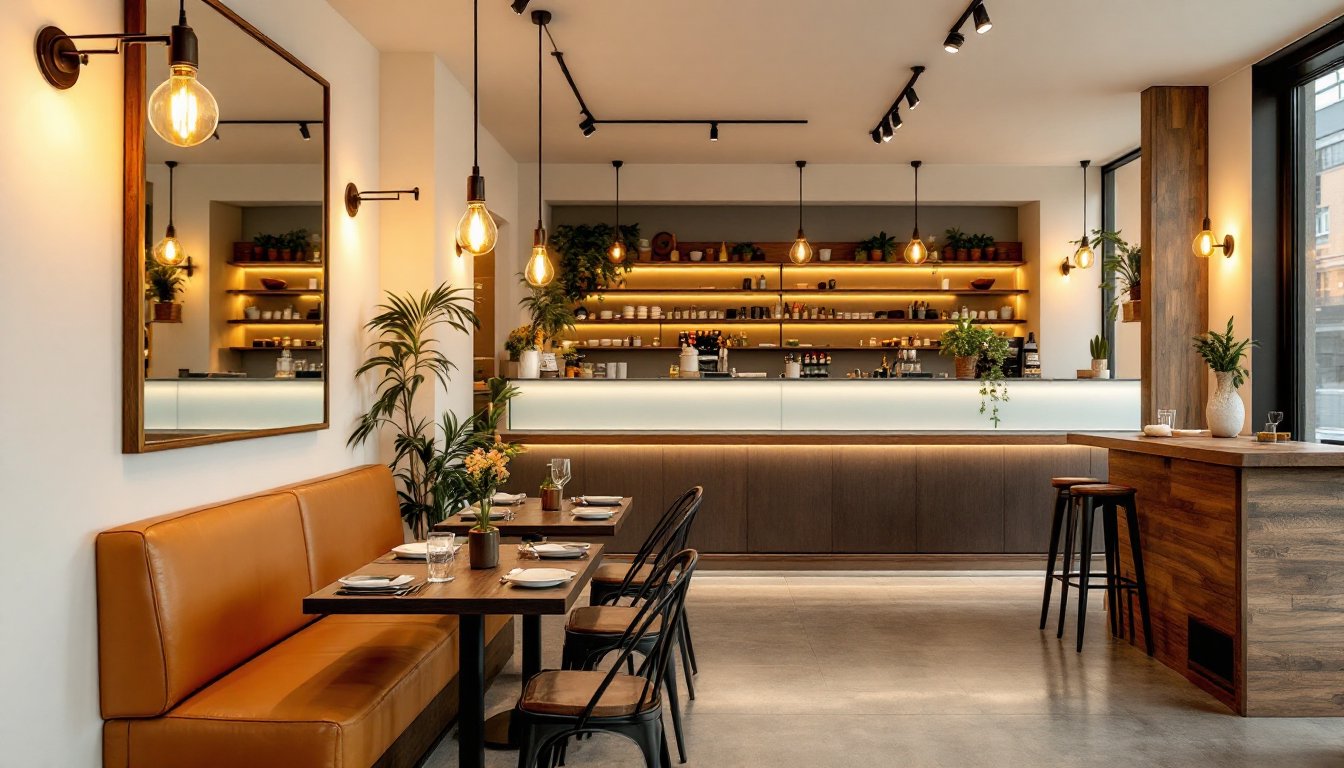

Small restaurant spaces demand smarter design choices than their sprawling counterparts. Every square foot affects revenue potential, guest comfort, and operational flow. In tight quarters, whether it’s a 600-square-foot cafe or a 1,200-square-foot bistro, design mistakes compound quickly. A cramped layout slows service. Poor lighting kills ambiance. Oversized furniture eats precious seating capacity. The good news? Strategic interior design transforms spatial constraints into competitive advantages. Restaurants that nail color schemes, lighting layers, and traffic patterns often outperform larger competitors by creating memorable, intimate experiences customers seek out. This guide walks through proven design strategies that maximize both functionality and atmosphere without blowing budgets or requiring structural overhauls.
Key Takeaways
- Small restaurant interior design maximizes every square foot by optimizing space planning, lighting, and traffic flow to increase seating capacity and revenue per square foot without feeling cramped.
- Strategic color schemes with Light Reflectance Values between 50-70, layered lighting (ambient, task, and accent), and thoughtfully placed mirrors create the visual illusion of spaciousness in compact dining areas.
- Perimeter-focused layouts with banquettes and built-in seating generate 15-20% higher capacity than freestanding furniture while improving operational flow and guest comfort.
- Acoustic treatments like upholstered furniture, fabric-wrapped panels, and wood slat ceilings reduce noise to optimal 60-70 decibels, improving the dining experience without sacrificing functionality.
- Paint and LED lighting upgrades deliver the highest ROI for budget-conscious owners, with professional repainting costing just $2-6 per square foot and modernizing fixtures starting at $100-300 each.
- Flexible furniture with stackable or wheeled designs, custom table sizing (28×42 inches for two-tops), and armless chairs maximize seating adaptability while maintaining comfortable 36-48 inch clearances between tables.
Why Interior Design Matters More for Small Restaurants
Small restaurants can’t hide design flaws behind sheer square footage. Every sightline, surface choice, and furniture piece directly impacts the customer experience and operational efficiency.
First impressions form within 90 seconds of entry. In compact spaces, guests immediately assess whether the restaurant feels crowded, chaotic, or thoughtfully curated. Poor space planning telegraphs disorganization. Thoughtful design signals professionalism and attention to detail, qualities diners associate with food quality before tasting a single dish.
Revenue per square foot becomes the critical metric. A well-designed 800-square-foot restaurant seating 32 guests comfortably generates more revenue than a cramped 900-square-foot space jamming in 40 seats where servers can’t navigate efficiently and diners feel rushed. Table turnover rates drop when guests linger uncomfortably or when bottlenecks slow service.
The design also defines brand identity more intensely in smaller footprints. With fewer surfaces and elements to work with, each choice, from barstool height to wall texture, carries more weight in communicating the restaurant’s concept, whether it’s fast-casual Mediterranean or upscale farm-to-table.
Space Planning Essentials for Compact Dining Areas
Effective space planning starts with understanding circulation paths and required clearances before placing a single table. Industry standards call for minimum 18-inch clearances between chair backs when both seats are occupied, and 24 to 30 inches for primary service aisles. Skimping on these dimensions creates safety hazards and slows table turns.
Kitchen-to-dining flow dictates much of the layout. Position the service station or POS system to minimize cross-traffic between servers carrying food and guests moving to restrooms or exits. In tight spaces, consider one-way traffic patterns using visual cues like floor treatments or half-walls rather than forcing bidirectional movement through narrow corridors.
Zoning helps manage noise and energy. Group two-tops near windows or along banquettes. Place four-tops in central areas. If the restaurant includes a bar, position it as a buffer between the entry and dining area to absorb waiting guests without crowding seated diners. This separation also manages sound levels, hard bar surfaces amplify conversation, while upholstered dining areas absorb it.
Don’t forget vertical space planning. Wall-mounted shelving, hanging plants, or suspended light fixtures draw the eye upward, making ceilings feel taller without construction. In spaces with low ceilings (under 9 feet), avoid bulky chandeliers that compress the visual field.
Choosing the Right Layout for Your Restaurant Size
Three primary layouts work for small restaurants, each with distinct advantages:
Linear/gallery layouts suit narrow storefronts (12 to 16 feet wide). Tables line one or both walls with a central aisle. This maximizes seating in tight widths but limits flexibility for party sizes. Works best for quick-service or counter-service concepts.
Cluster layouts group tables in pods separated by partial dividers, planters, or level changes. This approach creates intimate zones within open footprints (900 to 1,500 square feet) and allows flexible configurations for different party sizes. Requires careful sightline management so no zone feels isolated from the energy of the room.
Perimeter-focused layouts anchor seating along walls using banquettes or built-in benches, leaving the center more open. This arrangement typically increases capacity by 15 to 20 percent compared to freestanding furniture while improving traffic flow. The trade-off: less layout flexibility and higher upfront construction costs for built-ins.
For restaurants under 1,000 square feet, perimeter layouts with a few flexible center tables offer the best balance of capacity and adaptability.
Color, Lighting, and Materials That Expand Visual Space
Light-reflective paint colors in warm whites, soft grays, or muted earth tones push walls back visually. Skip stark white, it reads sterile under commercial lighting. Instead, choose colors with Light Reflectance Values (LRV) between 50 and 70 to bounce light without glare. Darker accent walls work if used strategically on the farthest wall from the entry to create depth, but avoid wrapping dark colors around small rooms.
Mirrors remain the most effective spatial illusion when placed thoughtfully. Position large mirrors opposite windows or light sources to double perceived brightness. Avoid placing mirrors where diners see themselves eating, it’s uncomfortable. Instead, angle them to reflect architectural features, artwork, or greenery.
Lighting layers define atmosphere more than any other single element. Combine three types:
- Ambient lighting (recessed cans, track lights): Provides base illumination at 20 to 30 foot-candles for dining areas
- Task lighting (pendants over tables, bar lighting): Focuses 40 to 50 foot-candles where needed for menu reading
- Accent lighting (wall sconces, picture lights): Adds dimension at 3:1 ratio to ambient levels
Dimmer switches on all circuits allow mood adjustment from lunch service to dinner. In spaces with low ceilings, use recessed or flush-mount fixtures rather than pendants that hang into sightlines.
Material choices affect both light behavior and perceived spaciousness. Glossy or semi-gloss finishes on tabletops, bar surfaces, and even sealed concrete floors reflect light and feel more expansive than matte surfaces. Textured materials like reclaimed wood, exposed brick, or concrete add visual interest without requiring square footage, but balance rough textures with smooth elements to avoid visual chaos.
Glass partitions separate zones (kitchen view, private dining nook) without blocking sightlines or light. Frosted or textured glass provides privacy while maintaining openness.
Furniture Selection and Placement Strategies
Scale matters more than style in small restaurants. Oversized farmhouse tables or bulky upholstered chairs devour space and reduce capacity. Standard restaurant tables measure 24 inches square for two-tops and 30 inches square for four-tops, but custom sizing down to 28 inches wide by 42 inches long for two-person tables can increase seating without sacrificing comfort.
Table height affects perception. Standard 30-inch dining height works for most concepts, but 36-inch counter height or 42-inch bar height tables along windows or walls feel less formal and encourage faster turnover for casual concepts. Mix heights to create visual variety.
Banquettes and built-in seating save 12 to 18 inches per seat compared to freestanding chairs by eliminating pull-back space. Design banquette seats at 18 inches deep and 18 inches high for comfort. Add cushions in durable commercial-grade vinyl or performance fabrics (look for 100,000+ double rubs on the Wyzenbeek test).
Chair selection balances comfort, durability, and footprint. Armless chairs tuck completely under tables, saving aisle space. Choose chairs no wider than 18 inches and avoid designs with wide legs that protrude into walkways. Stackable chairs provide flexibility for private events but often sacrifice comfort, weigh this trade-off against event frequency.
Flexible furniture extends utility. Tables with flip-top or folding mechanisms allow quick reconfigurations. Lightweight aluminum or steel-frame chairs move easily for parties while maintaining commercial durability. Some operators use wheeled table bases (lock-equipped) to shift layouts between lunch and dinner service.
Leave at least 36 inches between parallel table edges in main dining areas and 42 to 48 inches in high-traffic zones near entries or restrooms. Measure with chairs pulled out, not pushed in.
Creating Ambiance Without Sacrificing Functionality
Ambiance and efficiency aren’t opposing forces, they’re complementary when designed intentionally. Acoustic management tops the list. Hard surfaces (tile, concrete, glass) reflect sound, escalating noise levels that drive diners out. Target 60 to 70 decibels during peak service.
Add acoustic treatments that double as design elements:
- Fabric-wrapped acoustic panels on upper walls or ceilings
- Perforated wood slat ceilings with sound-absorbing backing
- Heavy curtains or drapes at windows or zone dividers
- Upholstered furniture and cushioned seating
Scent and temperature control impact comfort but often get overlooked. Ensure HVAC vents don’t blow directly on diners, install diffusers if needed. Maintain 68 to 72°F in dining areas. Avoid heavily scented candles or air fresheners that clash with food aromas: subtle greenery or fresh flowers work better.
Tabletop and service elements reinforce concept without clutter. A single bud vase, salt and pepper, and a small menu holder should be the maximum footprint on small tables. Cluttered tabletops shrink perceived space and complicate service.
Music selection and volume shape mood. Keep background music at 50 to 60 decibels, audible but not competing with conversation. Match genre to concept and time of day (upbeat lunch service, mellow dinner). Low-quality or poorly placed speakers undermine otherwise solid design.
Budget-Friendly Design Solutions for Small Restaurant Owners
Prioritize high-impact, low-cost changes before considering structural work. A $1,500 professional paint job with the right color creates more value than $5,000 in mediocre furniture.
Paint and lighting upgrades deliver the highest return on investment. Repainting walls in space-expanding colors costs $2 to $6 per square foot including labor. Swapping outdated fixtures for modern LED track lighting or pendant kits runs $100 to $300 per fixture installed, dramatically less than renovations.
DIY-friendly projects that maintain professional results:
- Refinishing existing tables with gel stain or paint ($15 to $30 per table in materials)
- Installing peel-and-stick vinyl floor planks over tired tile ($2 to $5 per square foot)
- Mounting floating shelves for decor or wine display ($25 to $75 per shelf)
- Adding removable wallpaper accent walls ($30 to $100 per 25-square-foot roll)
Safety note: Wear respirators (not dust masks) when using oil-based finishes or sanding existing coatings that may contain lead. Ensure proper ventilation.
Second-hand and surplus sourcing cuts furniture costs by 40 to 70 percent. Check restaurant supply auctions, going-out-of-business sales, and commercial liquidators. Inspect for structural integrity, wobbly table bases or cracked chair frames aren’t bargains.
Phased implementation spreads costs and allows testing. Start with entry and front-of-house updates that customers see first, then tackle back sections. This approach also lets owners assess what works before committing to full rollouts.
Energy-efficient choices like LED bulbs (lasting 25,000 to 50,000 hours versus 1,000 hours for incandescents) and programmable thermostats reduce operating costs, freeing budget for design improvements. Calculate payback periods, many upgrades self-fund within 12 to 18 months through lower utility bills.
When budgets simply won’t stretch, focus dollars on elements customers touch or interact with directly: chairs, tabletops, and lighting. Walls and ceilings matter less if the primary touchpoints feel quality.