
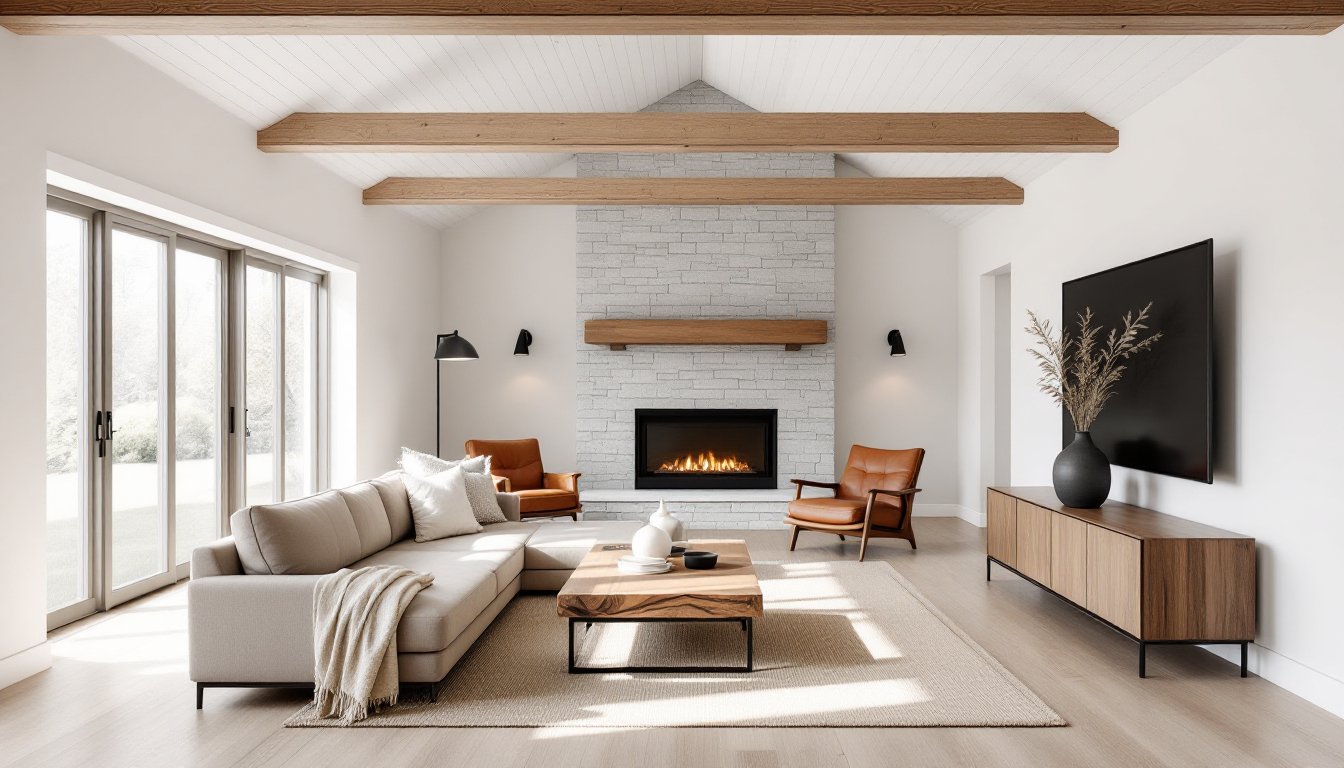

Modern rustic interior design strikes a balance between the raw authenticity of farmhouse living and the clean lines of contemporary aesthetics. It’s not about recreating a cabin in the woods, it’s about pulling natural warmth into sleek, functional spaces without the clutter or heaviness traditional rustic styles can bring. Homeowners drawn to this style want texture, character, and warmth, but they also value light-filled rooms, edited furnishings, and a layout that actually works for daily life. Getting it right requires intentional material choices, thoughtful restraint, and an understanding of how to layer finishes without overwhelming a room.
Key Takeaways
- Modern rustic interior design balances the warmth of natural materials with clean, uncluttered contemporary spaces that avoid the heaviness of traditional rustic styles.
- Essential elements include natural materials like reclaimed wood, stone, and metal finishes, paired with neutral color palettes and earthy accents to create layered, textured interiors.
- Restraint is crucial—choose one or two standout rustic features such as exposed beams or a stone fireplace, then balance them with sleek, minimal furnishings and ample natural light.
- Furniture should have clean lines and substantial feel without ornate details; prioritize solid wood pieces, leather upholstery, and geometric profiles over distressed or heavily carved items.
- Avoid common modern rustic mistakes like over-rustifying with too many barn doors and antiques, mixing too many conflicting wood tones, or neglecting layered lighting that prevents rooms from feeling dark.
- Quality materials and authentic finishes matter more than quantity—invest in real wood mantels, genuine stone, and honest craftsmanship rather than cheap laminate or faux finishes that undermine the aesthetic.
What Is Modern Rustic Interior Design?
Modern rustic interior design merges the organic, handcrafted appeal of rustic decor with the streamlined simplicity of modern design. The style emphasizes natural materials, reclaimed wood, stone, metal, leather, but arranges them in uncluttered spaces with contemporary furniture profiles and minimal ornamentation.
Unlike traditional rustic design, which often leans heavily on dark woods, ornate carvings, and layered textiles, modern rustic keeps surfaces cleaner and allows more breathing room. A modern rustic living room might feature a live-edge walnut coffee table paired with a low-profile sectional in linen, or exposed ceiling beams contrasted against white shiplap walls.
The key distinction is restraint. Every rustic element, whether it’s a barn door, a stone fireplace surround, or a cowhide rug, is balanced by something sleek, neutral, or geometrically simple. This prevents the space from feeling overly themed or dated. It’s a hybrid approach that works well in both new construction with modern floor plans and older homes where existing architectural details (like wide-plank floors or brick fireplaces) can be preserved and reframed.
Key Elements That Define the Modern Rustic Aesthetic
Natural Materials and Organic Textures
Wood is the backbone of modern rustic interiors, but the finish and application matter. Look for unstained or lightly finished hardwoods, white oak, maple, or reclaimed pine, rather than heavily varnished cherry or knotty pine. Actual dimension lumber (like 2×6 or 2×8 beams) can be left exposed on ceilings, but they’re often wire-brushed or sandblasted for texture rather than stained dark brown.
Stone and concrete add weight and permanence. A honed granite countertop, a stacked stone accent wall, or polished concrete floors all reinforce the connection to raw, natural materials. Avoid glossy or overly decorative stone: modern rustic favors matte or textured finishes.
Metal accents, particularly black steel, brushed nickel, or aged bronze, appear in light fixtures, stair railings, and hardware. Steel I-beams or metal strapping on wood mantels add an industrial edge without feeling cold.
Textiles should feel substantial but not fussy. Think chunky linen, wool throws, jute rugs, and leather upholstery. Avoid synthetics or overly patterned fabrics: the goal is tactile richness, not visual noise.
Neutral Color Palettes with Earthy Accents
Modern rustic color schemes lean heavily on neutrals: whites, warm grays, taupes, and soft beiges. These create a calm backdrop that lets natural materials stand out. White oak flooring, for example, reads as warm and organic against white walls, while dark walnut cabinetry pops against light quartz countertops.
Earthy accents, rust, terracotta, sage green, charcoal, or deep navy, add depth without disrupting the overall restraint. These might appear in throw pillows, a single painted accent wall, or ceramic decor.
Avoid high-contrast schemes or overly saturated colors. Modern rustic isn’t about drama, it’s about subtle layering and tonal variation. A room might use three shades of gray alongside natural wood tones and a single muted green plant.
Lighting plays a supporting role here. Natural light is critical: large windows, minimal window treatments, and light-reflective finishes keep spaces from feeling cave-like, which is a common pitfall in traditional rustic design.
How to Create a Modern Rustic Living Space
Start with the bones of the room. If the space has existing wood floors, consider refinishing them with a matte or satin polyurethane rather than a high-gloss finish. If installing new flooring, engineered hardwood (¾” thick with a 4–6 mm wear layer) offers stability and works well over radiant heat, which is common in modern builds.
For walls, shiplap or tongue-and-groove paneling can add texture without going full barn. Install horizontally and paint it white or a soft gray to keep it contemporary. If the room has drywall, leave most of it smooth and reserve wood treatments for a single accent wall or ceiling detail.
Exposed beams are a signature move, but they need to be structurally honest or at least visually convincing. Faux beams (hollow box beams made from 1× material) are an option if the ceiling can’t support real reclaimed timbers, but they should be sized and finished to look proportional. A 12-foot span might use an 8″×8″ beam profile: anything smaller looks flimsy.
Fireplace surrounds are another focal point. A stone veneer or poured concrete surround with a thick wood mantel (a solid 6×8 or 8×8 beam) grounds the room. Pair it with a simple black steel firebox or a linear gas insert for a cleaner look than a traditional masonry fireplace.
Furnishings should be low-profile and geometric. A platform bed, a modular sectional with track arms, or a rectangular dining table in solid wood all fit the aesthetic. Avoid ornate carvings, turned legs, or anything with a traditional silhouette.
Layer in texture through area rugs (jute, sisal, or flatweave wool), throw blankets, and a few oversized ceramic or stoneware vessels. Keep surfaces mostly clear, modern rustic doesn’t do tchotchkes.
Furniture and Decor Choices for Modern Rustic Interiors
Furniture in a modern rustic space should feel grounded and substantial, but not bulky. A solid wood dining table with a live edge or a simple trestle base works better than a carved farmhouse table. Pair it with metal-framed chairs or upholstered seating in neutral linen.
Case goods, dressers, sideboards, media consoles, should have clean lines and minimal hardware. Look for pieces in white oak, walnut, or reclaimed wood with a natural or wire-brushed finish. Avoid distressed finishes or artificial aging: authenticity matters here.
Seating should prioritize comfort and simplicity. A leather sofa in cognac or charcoal, a linen slipcovered sectional, or mid-century-style lounge chairs all complement the aesthetic. Avoid overstuffed furniture or anything with ruffles, skirts, or excessive tufting.
Lighting is both functional and sculptural. Pendant lights in blackened steel, wood and metal chandeliers, or industrial-style sconces add visual interest without clutter. Edison bulbs or warm LED filaments (2700K color temperature) reinforce the handcrafted feel.
Decor should be selective. A large-scale piece of abstract art, a vintage rug, or a single oversized ceramic vase makes more impact than a gallery wall of small prints. Greenery, fiddle leaf figs, rubber plants, or eucalyptus branches, adds life and softens hard surfaces.
Window treatments should be minimal. Linen drapes on simple rods, woven wood blinds, or even no treatments at all (if privacy allows) keep the focus on natural light and views. Avoid heavy curtains, valances, or anything overly decorative.
Common Mistakes to Avoid in Modern Rustic Design
One of the biggest mistakes is over-rustifying the space. Too many barn doors, too much reclaimed wood, or an overload of antler chandeliers tips the room into kitsch. Modern rustic requires editing, choose one or two standout rustic elements and let the rest of the room stay minimal.
Another pitfall is ignoring scale. A massive farmhouse table in a small dining nook, or oversized beams in a room with 8-foot ceilings, throws off proportions. Measure carefully and consider how furniture and architectural details relate to the room’s dimensions.
Mixing too many wood tones can create visual chaos. Stick to two or three wood species with similar undertones, warm (oak, pine) or cool (walnut, maple), and vary them by texture rather than color.
Neglecting lighting is another common error. Rustic materials can absorb light, making a room feel dark and closed-in. Layer ambient, task, and accent lighting, and maximize natural light with large windows and light-colored walls.
Finally, don’t skimp on quality materials. Cheap laminate flooring, faux stone veneer that looks plasticky, or poorly finished wood all undermine the authenticity that makes modern rustic work. If budget is tight, choose one high-impact material (like a real wood mantel or quality tile) and keep other finishes simple and honest.
Modern rustic design thrives on the tension between raw and refined. When executed with care, it delivers spaces that feel both grounded and fresh, rooms that respect craftsmanship while embracing the clean functionality of contemporary living.