
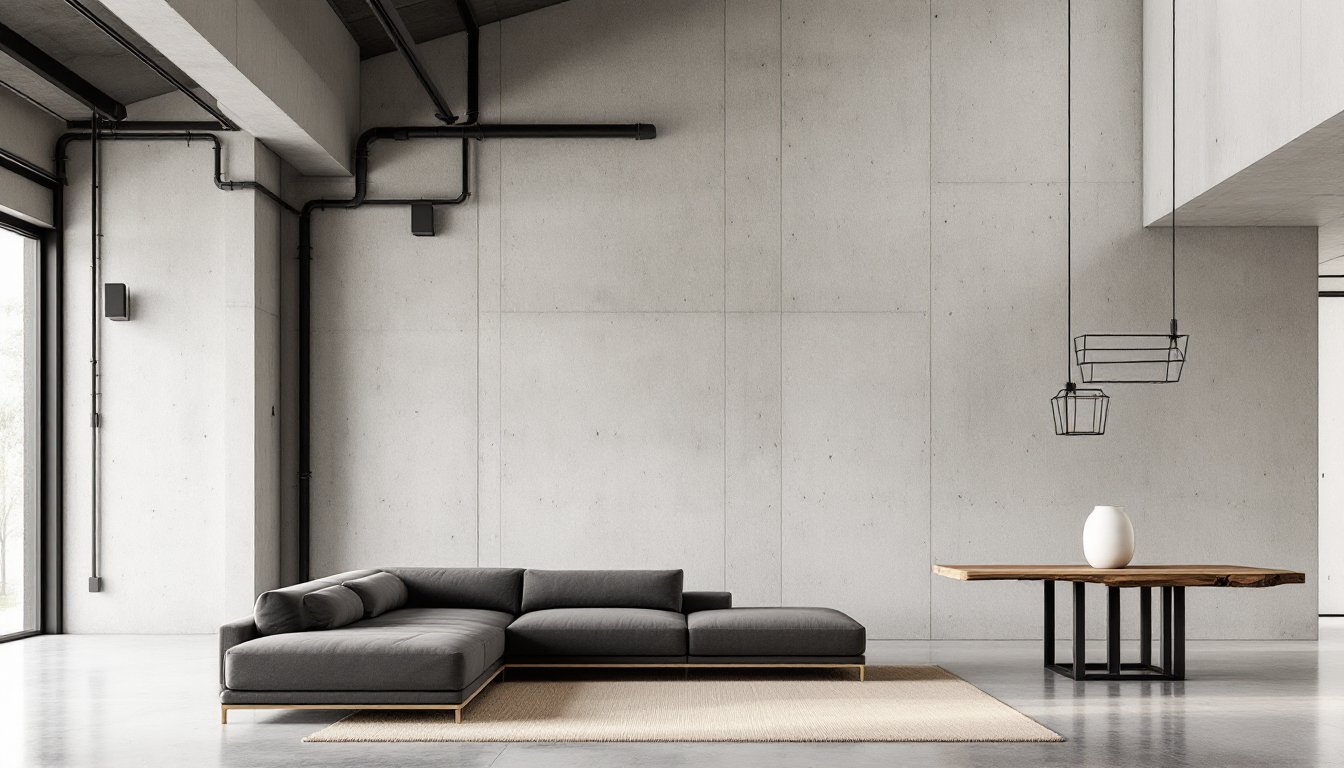

Brutalist interior design isn’t trying to comfort anyone. Born from the architectural movement that gave us raw concrete monuments and fortress-like civic buildings, brutalism interior design strips away softness and decoration to expose structure, material, and form. It’s polarizing, some see it as cold and oppressive, others as honest and powerful. But in 2026, brutalism has shifted from niche architectural curiosity to a legitimate interior design language, particularly for homeowners and renters who want spaces that feel substantial, uncompromising, and utterly distinct from the beige-and-shiplap aesthetic that’s dominated the last decade.
Key Takeaways
- Brutalist interior design exposes structure and raw materials like concrete, steel, and CMU blocks while rejecting ornamentation, creating honest and sculptural spaces that feel substantial and distinct from conventional aesthetics.
- Essential brutalist materials include poured or board-formed concrete, exposed steel beams, concrete masonry units, raw wood, and large unframed glass, all left visible to celebrate their material honesty.
- Incorporate brutalist design by starting with your home’s shell, using concrete microtopping overlays on drywall, exposing ceiling elements, and installing industrial lighting with visible hardware to achieve the aesthetic.
- Brutalist color palettes rely on cool grayscale tones—concrete gray, charcoal, and black—with warm accents appearing only as natural material outcomes like rust patina or raw wood, never as decorative paint choices.
- Avoid confusing brutalism with industrial design, failing to provide adequate lighting (aim for 50–75 foot-candles), and overlooking acoustics, which can make concrete and hard-surface spaces echo and feel uninhabitable.
- Prevent common missteps by choosing furniture with visible construction and clear geometry, adding textural textiles to warm the space, and ensuring proper safety and code compliance for exposed materials and structural work.
What Is Brutalist Interior Design?
Brutalist interior design takes its cues from mid-20th-century Brutalist architecture, think raw concrete, repetitive geometric forms, and an emphasis on material honesty. The term comes from the French béton brut (raw concrete), not from “brutal,” though the aesthetic can certainly feel unforgiving.
In interiors, brutalism rejects ornamentation and concealment. Walls might be poured concrete, CMU block, or textured plaster left unpainted. Ceilings expose ductwork, conduit, and structural beams. Floors are polished concrete, industrial tile, or sealed screed. It’s not minimalism, minimalism is serene and restrained, while brutalism is confrontational and sculptural.
This style works particularly well in loft conversions, basements, garages turned living spaces, or new builds where structural elements can be left exposed from the start. Retrofitting a traditional home requires more effort, but it’s doable with the right materials and a tolerance for demolition.
Key Characteristics of Brutalist Interiors
Brutalist spaces share a handful of defining traits. First, exposed structure: load-bearing walls, steel beams, concrete columns, and ceiling joists are left visible and often celebrated as focal points. If a element is structural, it stays in view.
Second, monolithic surfaces. Large expanses of uninterrupted material, concrete walls, steel panels, or board-formed plaster, create a sense of mass and permanence. Seams, fasteners, and formwork patterns are retained, not hidden.
Third, geometric repetition. Brutalism loves modular forms: grid patterns in cabinetry, recessed lighting in regular intervals, stacked shelving units, and angular furniture. This isn’t chaotic, it’s ordered, almost institutional.
Fourth, sculptural fixtures. Lighting, furniture, and built-ins become three-dimensional objects, not background elements. Think cantilevered shelves, chunky pendant lights with visible hardware, and freestanding room dividers made from CMU or steel frame.
Essential Materials and Textures
The material palette is narrow but textured. Concrete is foundational, whether poured-in-place, board-formed, or applied as a microtopping over existing drywall or plywood. Board-formed concrete (where plywood formwork leaves a wood grain imprint) adds subtle texture without softening the material’s heft.
Steel and metal show up as exposed I-beams, angle iron shelving brackets, blackened steel cabinetry, and raw or clear-coated steel plate. Hot-rolled steel develops a mill scale that can be sealed with a matte clearcoat: cold-rolled steel is smoother but more prone to rust without treatment.
Masonry, particularly concrete masonry units (CMU) in 8″×8″×16″ nominal size, can be used for interior partition walls, kitchen islands, or feature walls. Leave them unfinished or seal with a penetrating masonry sealer to prevent dusting.
Wood appears sparingly, often as structural plywood with exposed edge grain, reclaimed heavy timber beams, or rough-sawn lumber. It’s never stained honey oak, if wood is present, it’s left raw, oiled, or finished with a matte natural sealer.
Glass is used in large, unframed panes or steel-framed partitions to preserve sightlines without cluttering the visual field. Industrial-style steel-frame windows and doors (often called Crittall-style) fit the aesthetic.
How to Incorporate Brutalist Design in Your Home
Start with the shell. If the home has a concrete foundation or basement with poured walls, that’s a natural anchor point. Clean the surface, patch any spall or honeycombing with a concrete repair mortar, and seal with a breathable concrete sealer like a silicate-based densifier.
For drywall interiors, consider a microtopping or skim coat system. Products like Ardex Concrete or similar polymer-modified overlays can be troweled over existing drywall to mimic poured concrete. Thickness is typically 1/16″ to 1/8″, so minimal structural load is added. This is cosmetic, not structural, don’t expect it to bear weight.
Expose ceiling elements where possible. If ceiling joists or trusses are accessible in a basement or top floor, remove drywall (check for asbestos first in pre-1980s homes) and leave framing, ductwork, and conduit visible. Paint everything matte black or charcoal to unify the look. Note that removing drywall from a ceiling may expose knob-and-tube wiring or outdated electrical: consult an electrician before proceeding.
Install industrial lighting with visible mounting hardware. Surface-mount conduit, exposed junction boxes, and cage lights reinforce the utilitarian feel. Use LED Edison-style bulbs for warmth without sacrificing the raw aesthetic.
For flooring, polished concrete is ideal but requires either an existing slab or pouring a new topping slab (typically 1.5″ to 2″ thick over a vapor barrier and reinforcement mesh). Grinding and polishing existing basement slabs is more accessible: rent a planetary grinder and work through 30, 60, 120, and 400-grit metal-bond pads, then apply a lithium silicate densifier and a matte or satin guard.
Alternatively, use large-format porcelain tile that mimics concrete, or luxury vinyl plank (LVP) in industrial gray tones. Both are far easier to install than actual concrete.
Color Palettes That Define Brutalist Spaces
Brutalist interiors lean heavily into a grayscale foundation: concrete gray, charcoal, black, and off-white. These aren’t warm neutrals, they’re cool, flat, and unapologetic.
Concrete gray comes in many shades depending on aggregate and cement type, ranging from pale ash to deep slate. If mixing custom concrete or microtopping, use gray Portland cement (Type I/II) instead of white for a traditional mid-tone.
Charcoal and black anchor the palette. Paint exposed ductwork, steel beams, and trim in matte or satin black (Benjamin Moore’s Black Iron or Sherwin-Williams’ Tricorn Black work well). Avoid glossy finishes, they’re too slick for the aesthetic.
Warm accents appear as raw material tones, not paint. Rust patina on untreated steel, the amber of raw linseed oil on plywood, or the ochre of natural jute and sisal rugs. These aren’t decorative choices, they’re material outcomes.
Some designers introduce a single bold color, burnt orange, deep ochre, or military green, through a single upholstered piece or a feature wall. This can work, but restraint is critical. One accent, not five.
Furniture and Decor for the Brutalist Aesthetic
Choose furniture with clear geometry and visible construction. Solid wood or steel frames beat upholstered pieces with hidden joinery. A live-edge slab table on welded steel legs fits better than a farmhouse trestle table.
Look for modular and sculptural forms. Cube shelving units, blocky lounge chairs, cantilevered desks, and platform beds with no headboard all align with brutalist principles. Avoid anything with cabriole legs, turned spindles, or decorative carving.
Seating should be low-profile and substantial. Think Le Corbusier’s LC2 (though replicas are common), slab-sided benches, or even custom-built seating from CMU blocks topped with foam and canvas. Industrial metal stools and folding steel chairs (like those from Tolix, or similar) work for dining.
Textiles are restrained. Heavyweight linen, canvas, wool felt, and jute provide texture without pattern. A single large area rug in natural fiber (sisal or jute) can soften a concrete floor without undermining the aesthetic. Avoid anything floral, bohemian, or overly plush.
Decor is minimal and intentional. A single large-scale sculptural object, ceramic vessel, welded steel art piece, or architectural model, carries more weight than a gallery wall of prints. If art is included, favor black-and-white photography, line drawings, or abstract minimalism in simple metal or wood frames.
Common Mistakes to Avoid When Designing Brutalist Interiors
Mistake one: confusing brutalism with industrial. Industrial design celebrates factory heritage, exposed brick, vintage signage, Edison bulbs, and repurposed machinery. Brutalism is architectural and sculptural, not nostalgic. Skip the distressed metal signs and reclaimed barn wood.
Mistake two: insufficient lighting. Raw concrete and dark finishes absorb light. Without adequate artificial lighting, brutalist spaces become caves. Layer lighting: recessed or track for general illumination, task lighting at work surfaces, and sculptural pendants or floor lamps as focal points. Aim for 50–75 foot-candles in living areas.
Mistake three: ignoring acoustics. Hard surfaces reflect sound. Concrete floors, CMU walls, and exposed ceilings create echo and reverberation that make conversation difficult and music harsh. Add acoustic absorption through area rugs, heavy curtains, upholstered seating, or dedicated acoustic panels (fabric-wrapped fiberglass panels can be mounted as art).
Mistake four: overdoing the coldness. Brutalism doesn’t have to be uninhabitable. Introduce warmth through natural wood, textured textiles, and warm-white LED lighting (2700K–3000K color temperature). A single wooden dining table or wool throw can keep a space from feeling like a parking garage.
Mistake five: poor execution of faux finishes. A badly troweled concrete microtopping or a painted “concrete look” wall reads as cheap, not brutal. If DIY skills aren’t strong, hire a decorative concrete contractor for topcoats, or stick to real materials, CMU, plywood, and steel don’t require advanced skills, just careful layout and fastening.
Finally, don’t ignore safety and code compliance. Exposed steel and concrete edges can be sharp, radius corners or add edge protection in high-traffic areas. If removing walls, confirm they’re non-load-bearing or install a properly sized beam with an engineer’s stamp. Electrical work involving exposed conduit must meet NEC requirements: in most jurisdictions, this means metal conduit (EMT or rigid), proper boxes, and grounding.