
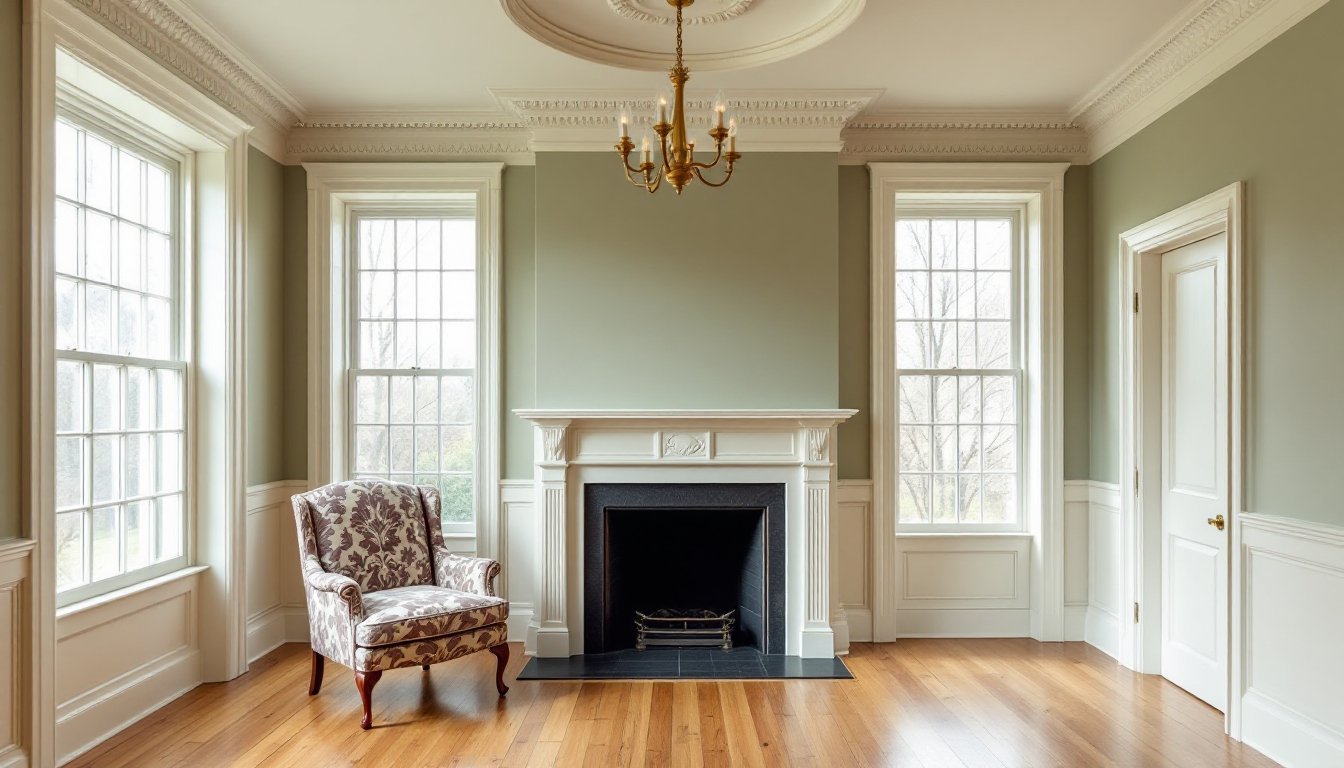

Georgian interior design has survived more than three centuries because it solved a problem most homeowners still face: how to make a space feel formal without being cold, elegant without being impractical. Named for the four King Georges who ruled Britain from 1714 to 1830, this style brought mathematical precision to residential design. Unlike heavily ornamented Victorian or minimalist modern styles, Georgian interiors rely on balanced proportions, restrained detail, and classical architecture. For DIYers looking to introduce timeless sophistication into their homes, whether restoring a period property or borrowing elements for a contemporary space, understanding Georgian design principles provides a solid foundation. It’s not about recreating a museum: it’s about applying symmetry, quality materials, and thoughtful details that age well.
Key Takeaways
- Georgian style interior design achieves formality without coldness through balanced proportions, restrained details, and classical architecture that have remained timeless for over three centuries.
- Symmetry is the structural foundation of Georgian interiors—align windows vertically and horizontally, center fireplaces on walls, and maintain consistent molding profiles throughout to create cohesive rooms.
- Georgian interior design relies on muted, natural color palettes including soft grays, sage greens, dusty blues, and warm creams, with painted woodwork in off-white or cream tones rather than stained finishes.
- Architectural elements like six-panel solid-core doors, fireplace mantels positioned 54–60 inches off the floor, and crown molding with multiple stacked profiles define authentic Georgian spaces and can be retrofitted into modern homes.
- You can adopt Georgian style in contemporary spaces by adding quality trim work, paneling walls with picture-frame molding, maintaining symmetry in furniture placement, and investing in fewer high-quality pieces rather than mass-produced items.
- Georgian flooring should feature wide-plank hardwood with hard-wax oil or low-sheen finishes instead of glossy polyurethane, preserving the historically appropriate look while protecting the wood.
What Is Georgian Style Interior Design?
Georgian style interior design refers to the architectural and decorative trends that dominated British and colonial American homes roughly between 1714 and 1830. The style draws heavily from classical Greek and Roman architecture, filtered through the Renaissance principles of Andrea Palladio, an Italian architect whose treatises on proportion and symmetry became the blueprint for Georgian builders.
Unlike earlier English styles that favored heavy timber framing and irregular layouts, Georgian design emphasized symmetry, proportion, and restrained ornamentation. Rooms were organized around a central axis, often a prominent staircase or hallway, with matching door and window placements on either side. Ceilings featured decorative plasterwork moldings (crown molding, medallions, cornices), and walls were typically divided into panels using wainscoting or applied trim.
This wasn’t aspirational design for the wealthy alone. Georgian principles trickled down into middle-class housing through pattern books, which were essentially the DIY manuals of their era. Builders and carpenters used these guides to replicate classical details without hiring architects. That practicality is why Georgian-inspired homes still appear in neighborhoods across the U.S., particularly along the East Coast and in historic districts.
Key Characteristics of Georgian Interior Design
Symmetry and Proportion
Symmetry isn’t just an aesthetic preference in Georgian design, it’s structural logic. Rooms are laid out in balanced pairs. Windows align vertically and horizontally. Fireplaces center on walls, flanked by matching alcoves or built-ins. Door casings match in width and profile throughout the home.
This commitment to proportion extends to trim work. Chair rails typically sit at 32–36 inches from the floor, dividing the wall into thirds or following the golden ratio. Baseboards range from 6 to 8 inches tall, often built up with multiple profiles rather than a single molding. Crown molding follows classical orders: simpler in bedrooms, more elaborate in public rooms like the parlor or dining room.
For DIYers adding Georgian trim to an existing home, the key is consistency. Use the same molding profiles room-to-room, and maintain symmetry even if the underlying structure isn’t perfectly square. A laser level and careful layout will get you 90% there. If walls are out of plumb, adjust trim reveals rather than forcing symmetry that draws attention to the flaws.
Classic Color Palettes
Georgian interiors originally relied on pigments derived from natural minerals and plants, which limited the palette but gave rooms a cohesive, muted sophistication. Common wall colors included soft grays, sage greens, dusty blues, warm creams, and deeper tones like burgundy or olive in formal spaces.
Woodwork was often painted, not stained. Trim, paneling, and built-ins appeared in off-white, cream, or stone colors, sometimes with faux finishes mimicking marble or exotic woods. This wasn’t cutting corners, paint protected joinery and allowed builders to use less expensive pine or poplar while achieving a uniform look.
When selecting paint for a Georgian-inspired project, look for low-VOC interior paints in historic color collections offered by major brands. These lines often reference archival pigments and provide better depth than standard whites and beiges. One gallon typically covers 350–400 square feet, but factor in multiple coats for rich, saturated colors. Always prime raw wood trim with an oil-based or shellac-based primer to prevent tannin bleed and achieve a smooth topcoat.
Georgian Architectural Elements and Features
Georgian homes are defined by their architectural bones, elements that can be retrofitted into newer construction or preserved during renovation.
Paneled doors are a hallmark. Interior doors featured six panels arranged symmetrically (two vertical panels over four smaller squares), typically 1-3/8 inches thick. Modern hollow-core doors won’t pass muster in a Georgian restoration: instead, look for solid-core or true stile-and-rail doors in fir or pine. These can be custom-milled or sourced from salvage yards. If replacing doors, match the casing width to the baseboard, typically 3-1/2 to 5-1/2 inches.
Fireplaces and mantels served as focal points. Georgian mantels are relatively simple compared to later Victorian styles: a mantel shelf supported by pilasters or columns, sometimes with a decorative frieze or dentil molding below the shelf. Materials ranged from painted wood to marble. When installing a reproduction mantel, ensure it’s proportional to the room height, the mantel shelf should sit around 54–60 inches off the floor for standard 8–9 foot ceilings.
Ceiling medallions and cornices added visual interest overhead. Plaster medallions centered around chandeliers, ranging from 18 inches to 36 inches in diameter depending on room size. Crown molding often incorporated multiple profiles stacked together. DIYers can replicate this with polyurethane or MDF moldings, which are lighter and easier to install than solid wood or plaster. Use a miter saw for clean joints, and a brad nailer with 18-gauge nails to fasten.
Flooring consisted of wide-plank hardwood, often oak, pine, or chestnut, installed as tongue-and-groove boards ranging from 3 to 10 inches wide. Floors were sometimes painted or covered with canvas floorcloths in utility areas. When restoring Georgian-era floors, avoid overly glossy polyurethane finishes. Instead, consider hard-wax oil or low-sheen polyurethane to maintain a historically appropriate look. Acclimate new hardwood for at least 72 hours before installation to prevent gapping.
Furniture and Decor in Georgian Interiors
Georgian furniture reflected the era’s obsession with proportion and craftsmanship. Pieces were sturdy, functional, and built to last, qualities that still make antique Georgian furniture desirable.
Cabinet makers like Thomas Chippendale and George Hepplewhite set the standard. Chairs featured straight or gently curved legs, upholstered seats, and carved details kept intentionally restrained. Tables were rectangular or round, often with drop leaves for flexibility in smaller rooms. Case goods, bookcases, secretaries, highboys, showcased dovetail joinery, inlay work, and figured veneers like walnut or mahogany.
For modern homes, reproduction Georgian furniture is widely available, but quality varies. Look for solid hardwood frames, not particle board or veneer over softwood. Dovetailed drawer joints indicate better construction than stapled or glued corners. If budget allows, vintage pieces from the early-to-mid 20th century often provide better value than new mass-produced furniture.
Textiles included damask, brocade, and linen in upholstery and drapery. Patterns were formal, stripes, florals, or classical motifs, but not overly busy. Window treatments were functional: inside-mounted shutters, simple panels, or valances. Avoid heavy swags or excessive layering, which skew Victorian.
Lighting evolved during the Georgian period from candles to oil lamps, eventually gas. Chandeliers were brass or crystal, wall sconces featured backplates in classical shapes. When updating a Georgian interior, choose fixtures with clean lines and minimal ornamentation. Aged brass or bronze finishes work better than polished chrome or nickel. Install dimmer switches to control light levels and create ambiance without relying on period-inappropriate bulbs.
How to Incorporate Georgian Style in Modern Homes
You don’t need a historic property to borrow from Georgian design. The style’s emphasis on proportion and quality translates well into contemporary spaces.
Start with architectural trim. Adding or upgrading baseboards, crown molding, and door casings immediately shifts a room’s character. Use MDF or poplar for painted trim, it’s stable, affordable, and takes paint well. Match profiles to the scale of your rooms: larger moldings suit higher ceilings, simpler profiles work in compact spaces. A miter saw and a finish nailer make installation manageable for most DIYers. Fill nail holes with spackling, sand smooth, prime, and apply two coats of semi-gloss paint.
Panel walls using picture-frame molding or wainscoting. Measure and mark a symmetrical grid, then install 1×3 or 1×4 pine or MDF strips directly to drywall with construction adhesive and brad nails. Paint the panels and wall the same color for subtle texture, or use contrasting tones for more drama. This works especially well in dining rooms, hallways, or home offices.
Focus on symmetry in furniture placement and decor. Center sofas on fireplaces or windows, flank with matching side tables or lamps. Hang artwork in pairs or in balanced groupings. This doesn’t mean everything must mirror exactly, vary heights and textures within a symmetrical framework.
Choose a restrained color palette with one or two accent tones. Soft grays, warm whites, muted greens, and navy blues provide a Georgian-appropriate backdrop. Use deeper colors sparingly, on an accent wall, in a powder room, or on cabinetry.
Finally, invest in a few high-quality pieces rather than filling rooms with disposable furniture. Georgian design values craftsmanship. A solid wood dining table, a well-made upholstered chair, or a vintage secretary desk will anchor a room far better than a dozen mass-market items. Shop estate sales, auctions, and architectural salvage yards for period hardware, lighting, and mantels that bring authentic character without the cost of full restoration.