
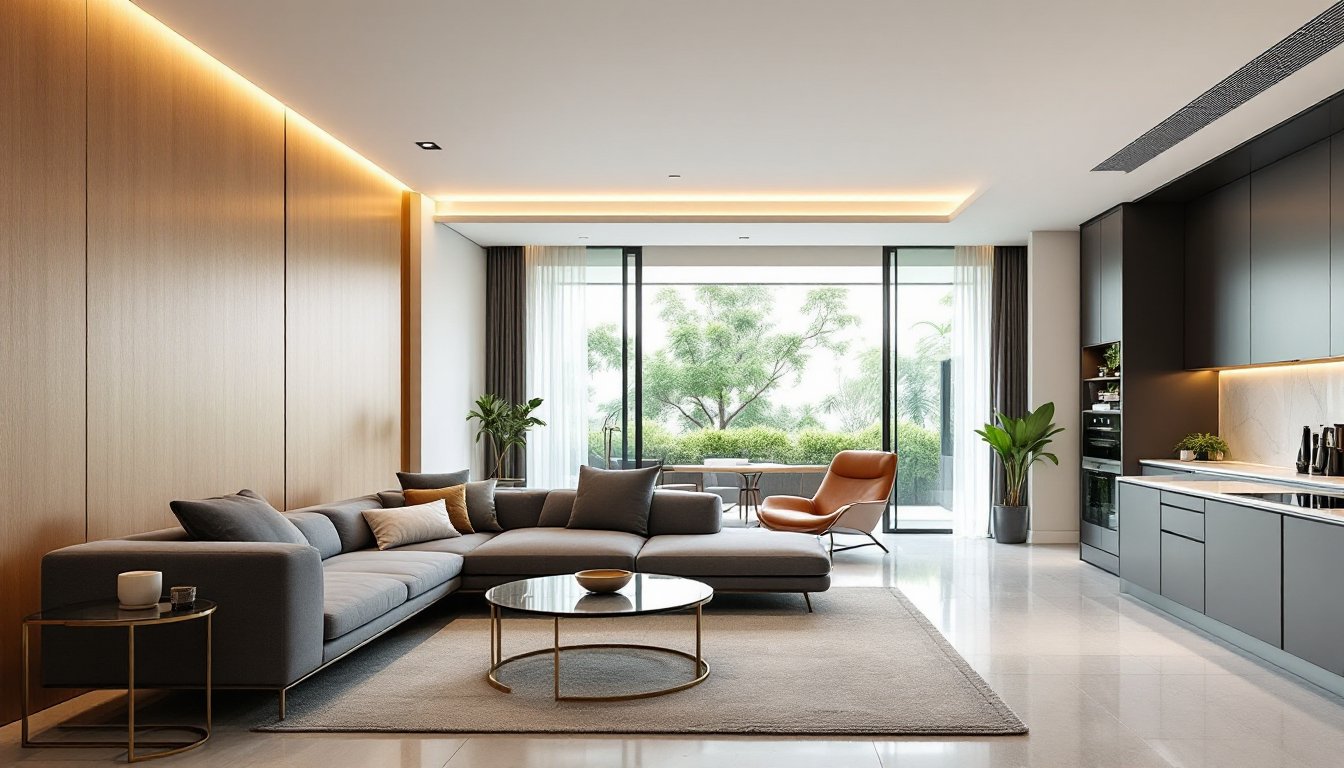

Singapore’s luxury interior design scene has evolved into a sophisticated blend of cultural heritage, cutting-edge technology, and climate-conscious aesthetics. As property values climb and homeowners invest in long-term quality, the distinction between standard renovation and true luxury design lies in material selection, spatial planning, and bespoke craftsmanship. This guide walks through what defines high-end interiors in Singapore’s unique context, from tropical-adapted design strategies to the budgeting realities of premium finishes. Whether planning a penthouse refresh or a landed property overhaul, understanding these fundamentals helps homeowners make informed decisions that balance aspiration with practicality.
Key Takeaways
- Luxury interior design in Singapore prioritizes spatial efficiency, material authenticity, and integrated technology, working within strict BCA regulations and tropical climate constraints.
- Premium finishes in Singapore’s luxury residential market cost between SGD 150,000 and SGD 500,000+ for standard condos, with custom millwork, engineered flooring, and smart home pre-wiring representing major cost categories.
- Modern contemporary elegance and biophilic tropical design dominate Singapore’s luxury aesthetic, requiring careful attention to moisture-resistant materials, climate adaptation, and compliance with MCST condo by-laws.
- High-end kitchen and bathroom specifications demand integrated appliances, full-extension soft-close hardware, linear drains, and proper ventilation systems to prevent mold in Singapore’s 80% humidity environment.
- Selecting a luxury interior designer requires verifying SIDA affiliation, reviewing portfolios of similar property types, and confirming they work with licensed BCA-registered contractors and professional engineers.
- Budget 15-20% contingency for unforeseen structural or electrical issues, and plan for 4-6 month timelines from demolition to handover, especially when importing custom furniture or navigating regulatory permit requirements.
What Defines Luxury Interior Design in Singapore
Luxury interior design in Singapore goes beyond expensive furniture and marble countertops. It hinges on three core principles: spatial efficiency, material authenticity, and integrated technology.
Singapore’s Building and Construction Authority (BCA) regulations shape interior layouts, particularly in condominiums where structural walls and wet areas have strict modification limits. Luxury designs work within these constraints through clever space planning, custom joinery that maximizes storage without visual clutter, concealed service runs for climate control, and acoustic treatments that address noise transmission in high-density buildings.
Material authenticity means specifying solid timber veneers over laminates, natural stone with book-matched grain patterns, and hand-finished metalwork. Common luxury materials include Italian Calacatta marble, engineered oak flooring (more stable in Singapore’s 80% humidity than solid planks), and brushed brass fixtures with PVD coating to resist tarnishing in tropical conditions.
Integrated technology includes centralized home automation for lighting, climate zones, and motorized window treatments, essential for managing Singapore’s solar heat gain. High-end projects often incorporate smart glass that transitions from transparent to opaque, eliminating the need for curtains while maintaining privacy.
Luxury also means working with licensed contractors who understand MOM regulations for foreign worker employment and HDB/URA permit requirements for structural changes. Cutting corners on permits or unlicensed electrical work isn’t luxury, it’s liability.
Popular Luxury Interior Design Styles in Singapore
Modern Contemporary Elegance
Modern contemporary remains the dominant luxury style in Singapore’s high-rise condos and landed properties. This approach emphasizes clean lines, neutral palettes (greige, warm whites, charcoal), and minimal ornamentation.
Key features include full-height cabinetry that conceals appliances and storage, large-format porcelain tiles (typically 800×800mm or 1200×600mm to reduce grout lines), and integrated lighting, recessed LED strips, cove lighting, and track systems replace standalone fixtures. Furniture tends toward low-profile sectionals, cantilever tables, and statement pieces like a single designer lounge chair rather than matched sets.
Material contrasts drive visual interest: a fluted wood panel accent wall against smooth plaster, matte black window frames juxtaposed with polished marble flooring. Avoid the sterile hotel-lobby effect by introducing texture through handwoven rugs, linen upholstery, or tactile wall finishes like microcement.
Tropical Luxury and Biophilic Design
Biophilic design, integrating natural elements into built environments, has surged in Singapore’s luxury market, driven by the government’s City in Nature initiative and growing awareness of wellness design.
Tropical luxury incorporates indoor greenery beyond token potted plants: living green walls with automated irrigation (requiring waterproofing and drainage planning), skylights or internal courtyards for natural light, and oversized sliding glass doors that blur indoor-outdoor boundaries. Materials lean toward teak, rattan, and terrazzo with embedded stone chips.
Climate adaptation is critical. Specify outdoor-rated fabrics for balcony furniture (solution-dyed acrylic resists UV and mold), install ceiling fans even in air-conditioned spaces to improve circulation, and use permeable paving in courtyards to manage tropical downpours.
This style suits landed properties and ground-floor units but presents challenges in high-rise condos with weight limits on balcony planters and MCST (Management Corporation Strata Title) restrictions on façade modifications. Always verify condo by-laws before installing external planters or altering balcony railings.
Key Elements of High-End Singapore Interiors
Several elements consistently appear in Singapore’s luxury residential projects:
Custom millwork defines high-end interiors. Built-in wardrobes with soft-close mechanisms, fluted paneling, and hidden service panels for electrical boards elevate spaces beyond off-the-shelf solutions. Expect marine-grade plywood cores (more moisture-resistant than MDF) with veneer or laminate facing.
Kitchen specifications often include quartz composite countertops (more practical than marble for acidic spills), induction cooktops with downdraft extraction (cleaner sightlines than overhead hoods), and integrated appliances from brands like Miele or Gaggenau. Drawer systems use full-extension soft-close runners: luxury kitchens avoid visible hardware.
Bathroom luxury centers on wet-room configurations with linear drains, rainfall showerheads plus handheld sprays, and wall-hung toilets with concealed cisterns. Underfloor heating (rare but growing in Singapore) requires electric mat systems since hydronic setups aren’t practical in tropical climates. Ventilation is non-negotiable, specify exhaust fans rated for Singapore’s humidity or face mold issues within months.
Lighting design layers ambient, task, and accent sources. Use 3000K warm white LEDs for living areas (4000K reads too clinical in residential settings), dimmer controls for flexibility, and dedicated circuits for statement fixtures. Avoid overlighting, luxury interiors balance illumination with shadow for depth.
Acoustic treatment matters in Singapore’s dense housing. Luxury renovations add sound-isolation boards to party walls, floating floors to reduce impact noise, and acoustic ceiling panels in media rooms. These aren’t visible, but occupants notice their absence.
Smart home integration requires planning at the rough-in stage. Run conduit for low-voltage wiring even if not immediately installing automation, retrofitting costs triple post-renovation. Specify neutral wires at switch boxes for smart switches (older Singapore homes often lack these).
Cost Considerations for Luxury Interior Design Projects
Luxury interior design in Singapore typically ranges from SGD 150,000 to SGD 500,000+ for a standard 1,200-1,500 sq ft condo, with landed properties often exceeding SGD 800,000 depending on scope and finishes. These figures assume premium materials, custom millwork, and licensed contractors, not high-street renovation packages.
Breakdown by category:
- Design fees: 10-15% of total project cost for full-service interior designers, covering space planning, material specifications, and site supervision
- Custom carpentry: SGD 1,200-1,800 per linear meter for full-height cabinetry with quality hardware
- Flooring: SGD 80-150 per sq ft for engineered timber or large-format tiles, including installation and waterproofing
- Marble/stone: SGD 200-400 per sq ft for book-matched feature walls or countertops (material, fabrication, installation)
- Kitchen systems: SGD 30,000-80,000 for mid-to-high luxury setups with integrated appliances
- Bathroom fixtures: SGD 8,000-20,000 per bathroom for luxury fittings, custom vanities, and wet-room waterproofing
- Lighting and electrical: SGD 20,000-40,000 including smart home pre-wiring, designer fixtures, and panel upgrades
- Permits and professional fees: SGD 3,000-8,000 for structural plans, PE endorsements (if modifying walls), and permit applications
Costs fluctuate with material sourcing, imported European tiles and Italian fixtures carry 30-50% premiums over equivalent Asian products. Lead times for custom furniture currently run 12-16 weeks: rush orders add 15-20% to costs.
Budget 15-20% contingency for unforeseen issues like outdated electrical panels requiring upgrades or concealed water damage during demolition. Luxury projects that skip proper hacking permits or structural assessments often face stop-work orders, adding weeks and penalty costs.
Choosing the Right Luxury Interior Designer in Singapore
Selecting a luxury interior designer requires vetting credentials, portfolio alignment, and project management capabilities, not just aesthetic preference.
Start by verifying professional affiliations: membership in the Singapore Interior Design Association (SIDA) or certification from recognized bodies indicates industry standing, though it’s not legally required to practice. More critical is ensuring the designer works with licensed contractors holding BCA registration and appropriate trade licenses (electrical, plumbing, structural).
Review portfolios for completed projects in similar property types. A designer experienced in landed homes may not understand condo MCST restrictions or high-rise logistics. Ask for client references and visit completed sites if possible, photos don’t reveal craftsmanship details like drawer alignment, grout consistency, or paint finish quality.
Clarify scope and deliverables upfront. Full-service designers handle space planning, material procurement, contractor coordination, and site supervision. Some offer design-only packages, leaving execution to the homeowner, cheaper initially but risky without construction knowledge. Understand what’s included: 3D renderings, material samples, construction drawings stamped by a Professional Engineer (PE) if structural changes are involved.
Discuss timelines realistically. Luxury renovations in Singapore typically run 4-6 months from demolition to handover, longer if custom furniture is imported or structural work requires permits. Designers promising 8-week turnarounds often cut corners or lack experience with regulatory processes.
Review contracts for payment schedules (typically staged: deposit, post-demolition, mid-completion, final), warranty terms, and dispute resolution. Reputable designers carry professional indemnity insurance and provide detailed quotations, vague lump-sum pricing without material specifications is a red flag.
Finally, assess communication style. Luxury projects involve countless decisions: a designer who doesn’t respond promptly or explain trade-offs clearly will frustrate the process. Chemistry matters when collaborating over several months on a six-figure investment.