
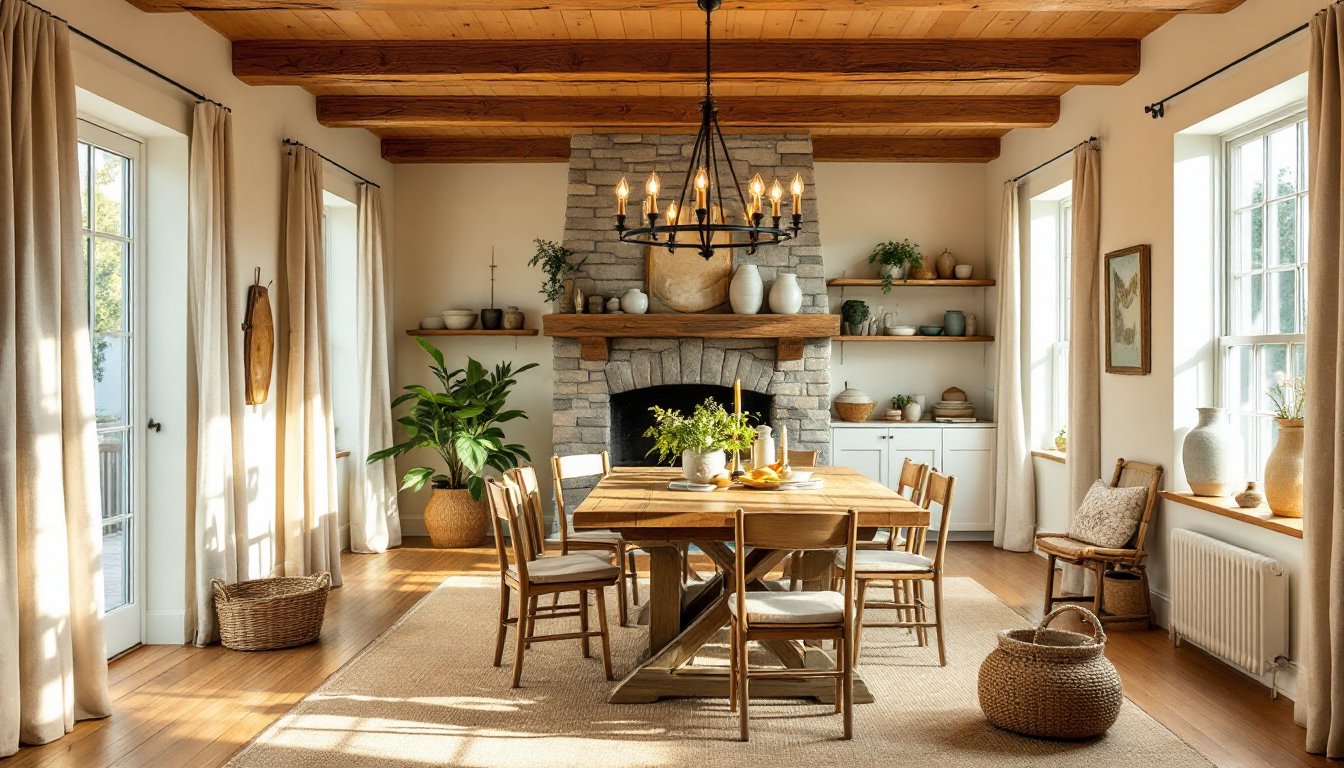

Country interior design remains one of the most enduring styles in residential spaces, not because it’s trendy, but because it works. It blends comfort with function, showcases natural materials over synthetic finishes, and creates rooms that feel lived-in from day one. Whether someone is renovating a rural farmhouse or softening a suburban split-level, country style offers a flexible framework that adapts to different budgets, skill levels, and regional aesthetics. This guide covers the essential elements, material choices, furniture selection, and room-specific strategies needed to execute authentic country interiors in 2026.
Key Takeaways
- Country interior design emphasizes natural materials, durability, and comfort by featuring exposed wood, linen upholstery, and function-first pieces that show authentic patina and wear.
- Essential country style elements include solid hardwood flooring in wide planks, warm earthy color palettes with soft undertones, and natural stone or brick accents that age visibly over time.
- Choose country-inspired furniture made from solid wood with joinery details and mortise-and-tenon construction, avoiding synthetic finishes and high-gloss lacquer.
- Kitchen country design focuses on apron-front farmhouse sinks, painted wood cabinetry with Shaker-style doors, and open shelving to display everyday dishware.
- Modern country strips back ornamentation while retaining natural materials and neutral palettes, while traditional farmhouse embraces bolder colors and more collected patterns—both approaches require thoughtful curation to avoid clutter.
- Country interiors work across subgenres like French, English, and American farmhouse styles, offering flexible frameworks that adapt to different budgets and regional aesthetics.
What Is Country Interior Design?
Country interior design draws from rural and agrarian traditions, emphasizing simplicity, durability, and a connection to natural materials. Unlike minimalist or industrial styles, country interiors prioritize warmth and texture, think exposed wood beams, linen upholstery, ceramic crocks, and hand-forged hardware.
The style isn’t monolithic. French country leans on soft pastels, toile fabrics, and ornate carved details. English country incorporates floral chintzes, deep leather chairs, and darker wood tones. American farmhouse style, arguably the most recognizable variant, features shiplap walls, barn doors, apron-front sinks, and reclaimed timber accents.
What unites these subgenres is a rejection of overly polished or synthetic finishes. Country interiors show the grain of the wood, the weave of the fabric, and the patina of aged metal. They favor function-first pieces, farmhouse tables built to handle meal prep and assignments, open shelving that displays everyday dishware, wide-plank floors chosen for durability as much as appearance.
This isn’t a style that hides wear. Scuffs on a pine table or fading on a cotton rug become part of the aesthetic, not flaws to conceal.
Essential Elements of Country Style Interiors
Natural Materials and Textures
Country interiors rely heavily on wood, stone, linen, cotton, wool, and terracotta. Engineered composites and high-gloss laminates don’t belong here.
For flooring, solid hardwood (oak, pine, or hickory) in wide planks (5″ to 7″ face width) is the gold standard. Reclaimed barn wood works well for accent walls or ceiling treatments, though buyers should verify it’s been kiln-dried and inspected for insect damage. Actual dimensions matter: a nominal 1×6 barn board measures 3/4″ x 5-1/2″, so plan stud spacing and fastener depth accordingly.
Natural stone, limestone, slate, or soapstone, suits kitchen countertops, hearth surrounds, and mudroom floors. These materials require sealing (typically penetrating sealers reapplied annually) and aren’t as stain-resistant as engineered quartz, but they age visibly and authentically.
Textiles should feel substantial. Linen curtains, wool throw blankets, and cotton canvas slipcovers provide texture without pattern overload. Avoid synthetic microfibers or polyester blends that photograph well but feel slick to the touch.
Warm, Earthy Color Palettes
Country palettes pull from the landscape: cream, warm white, sage green, dusty blue, terracotta, ochre, and soft gray. These aren’t the cool grays or stark whites popular in contemporary design, they lean warm, with yellow or red undertones.
For wall paint, look for off-whites with a Light Reflectance Value (LRV) between 70 and 85. Pure white (LRV 90+) reads too clinical. Test samples on north- and south-facing walls: natural light shifts these hues significantly throughout the day.
Accent colors come from natural dyes and minerals, think barn red (iron oxide), indigo blue, moss green, and mustard yellow. Use these on furniture, cabinetry, or textile accents rather than entire walls. A single accent wall isn’t traditional to the style: country interiors favor even, cohesive color across a room with variation introduced through furniture and décor.
Woodwork often stays natural or receives a clear matte polyurethane or oil finish rather than paint. If painting trim, use the same warm white as the walls or go slightly darker for definition, never bright white.
How to Choose Country-Inspired Furniture and Décor
Country furniture prioritizes solid wood construction, joinery over hardware, and profiles that don’t scream “style.” Avoid anything with mirrored panels, acrylic legs, or high-gloss lacquer.
Dining tables should be plank-top or trestle-base designs in oak, pine, or maple. Look for mortise-and-tenon joinery or breadboard ends (cross-grain caps that allow seasonal wood movement). A 72″ x 36″ table seats six comfortably: add leaves for larger gatherings. Refinishing a secondhand piece is often cheaper than buying new, strip old varnish with a citrus-based stripper, sand to 220 grit, and apply Danish oil or a satin poly.
Seating leans toward Windsor chairs, ladder-backs, or upholstered benches with linen or ticking-stripe fabric. Slipcovers are practical, they’re washable and conceal mismatched chair frames. Avoid overstuffed sectionals: country living rooms use smaller-scale sofas paired with armchairs.
Storage pieces, hutches, pie safes, dry sinks, originally served specific farm functions. Modern reproductions often skip structural details like dovetail drawers or hand-planed panels. If buying vintage, check for wood rot, active insect damage, and drawer alignment. A sticky drawer isn’t charming: it means the carcass is racked or the slides are shot.
Décor should be functional or referential to rural crafts: stoneware crocks, cast-iron cookware displayed on open shelving, wire baskets, enamelware pitchers, and handwoven baskets. Avoid mass-produced “farmhouse” signs with scripted slogans, they cheapen the aesthetic. Original folk art, vintage farm tools, or framed botanical prints carry more authenticity.
Lighting fixtures include wrought iron chandeliers, mercury glass pendants, and enamel-shaded sconces. Bulbs should be warm white (2700K–3000K), not daylight spectrum. Dimmer switches (standard rotary or slide types) add flexibility and are straightforward to install if the existing box is grounded.
Room-by-Room Country Design Ideas
Kitchens anchor country homes. Prioritize farmhouse sinks (also called apron-front sinks), which typically require modified base cabinets with no front stile. A 33″ single-bowl sink fits a 36″ cabinet: confirm rough-in dimensions before ordering. Pair with a bridge faucet or gooseneck design in brushed nickel or oil-rubbed bronze.
Cabinets work best in painted wood (not MDF) or natural hardwood with a clear finish. Shaker-style doors, flat center panel with square edges, suit the style without excessive detail. Open shelving on one wall balances closed storage and displays everyday dishes. Use 1×12 pine or poplar boards on heavy-duty brackets rated for at least 50 lbs per linear foot.
Butcher block or wood plank countertops add warmth but require monthly oiling with food-safe mineral oil. For work zones near the stove, use stone or tile. Subway tile backsplashes (3″ x 6″) in white or cream with gray grout (not white, it shows stains) remain a practical, timeless choice.
Living rooms benefit from exposed ceiling beams, real or faux. Installing faux beams (hollow polyurethane boxes) over drywall requires blocking or anchors into ceiling joists: use construction adhesive plus screws into solid framing. They add architectural weight without structural load.
Fireplace surrounds in stacked stone or brick create a focal point. If adding a mantel, use a solid 6×6 or 8×8 beam (actual dimensions: 5-1/2″ x 5-1/2″ or 7-1/4″ x 7-1/4″). Secure with heavy lag bolts into wall studs: a floating mantel supporting décor should be anchored into at least two studs.
Bedrooms keep it simple: iron or wood bed frames, linen bedding, and minimal window treatments. Swap hollow-core closet doors for wood-paneled barn doors on sliding hardware, but note that barn doors don’t seal sound or light as effectively as hinged doors, not ideal for bathrooms.
Bathrooms can incorporate country style through pedestal sinks, clawfoot tubs, and hexagonal floor tile. Clawfoot tubs require floor reinforcement, check joist span and spacing (typically 2x10s at 16″ on-center for a cast-iron tub). A standard 60″ cast-iron tub weighs 300–400 lbs empty: filled with water and a person, it approaches 900 lbs. Consult local building codes and consider a structural engineer for second-floor installations.
Modern Country vs. Traditional Farmhouse Style
Modern country strips back the ornamentation. It keeps the natural materials and neutral palette but eliminates ruffled curtains, busy florals, and collectible clutter. Think white oak floors, smooth plaster walls, linen Roman shades, and streamlined cabinetry. The aesthetic borrows from Scandinavian design, clean lines, edited décor, plenty of negative space.
Traditional farmhouse style embraces more pattern and layering: gingham tablecloths, floral upholstery, plate racks, and vintage signage. Colors can be bolder (red, navy, deep green), and rooms feel fuller, with multiple textures and collected objects on display.
Neither approach is more “correct,” but modern country tends to photograph better and may appeal to buyers if resale is a consideration. Traditional farmhouse feels cozier but risks visual clutter if not carefully curated. Mixing elements works, modern cabinetry with a vintage farm table, or streamlined furniture with a few well-chosen antique accessories, but requires a confident eye. When in doubt, edit down rather than pile on.