
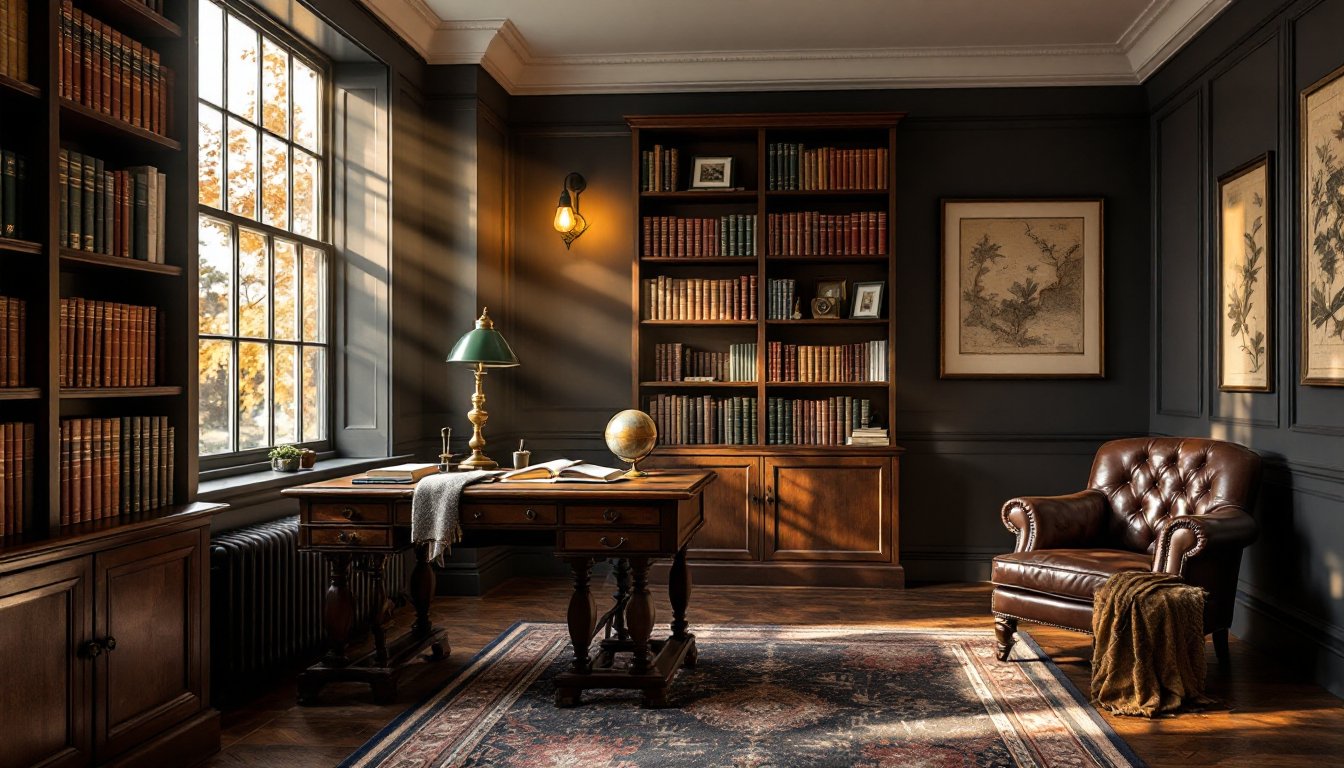

Dark academia interior design blends classic intellectual aesthetics with contemporary livability. Think moody libraries, rich wood tones, and vintage leather, but adapted for modern homes without requiring a mansion or a history degree. This style works in apartments, home offices, bedrooms, and reading nooks, creating spaces that feel collected, contemplative, and comfortable. Unlike purely decorative trends, modern dark academia relies on durable materials, intentional lighting, and functional furniture that improves with age. Homeowners who commit to this look should expect to invest in quality pieces, embrace darker paint colors, and appreciate the interplay between old-world charm and practical living.
Key Takeaways
- Modern dark academia interior design blends classic intellectualism with contemporary functionality, using rich wood tones, layered lighting, and curated accessories in spaces without requiring a mansion or period authenticity.
- Essential color palettes center on deep, saturated neutrals like charcoal, forest green, and burgundy, with paint prep and high-quality application crucial to avoid streaks on dark surfaces.
- Quality furniture investments—solid wood desks with dovetail joinery, hardwood-framed seating, and floor-to-ceiling bookshelves—create heirloom pieces that improve with age and define the scholarly aesthetic.
- Layered lighting using ambient fixtures, task lamps in warm white (2700K–3000K), and accent lights dramatically improves dark academia spaces and prevents a cave-like atmosphere.
- Natural materials like top-grain leather, wool rugs with hand-knotted construction, and walnut or ebonized oak finishes establish authenticity and durability across the design.
- Start with a single room—home office or reading nook—to test the dark academia palette and refine your approach before committing to larger spaces throughout your home.
What Defines Modern Dark Academia Interior Design?
Modern dark academia interior design merges Gothic Revival, Victorian, and mid-century scholarly spaces with clean lines and updated function. The style centers on intellectualism, bookshelves packed with hardcovers, writing desks positioned near windows, globes and maps as functional décor.
Key architectural elements include dark-stained wood trim, exposed bookshelves (floor-to-ceiling when possible), and paneling or wainscoting. Crown molding and chair rails add dimension without requiring structural changes, both install with finish nails and construction adhesive over existing drywall.
Modern updates differentiate this from pure period revival. Spaces remain uncluttered, technology integrates discreetly (charging stations hidden in desk drawers, matte black outlet covers), and seating prioritizes ergonomics alongside aesthetics. Unlike maximalist Victorian interiors, modern dark academia edits ruthlessly: every object should serve a purpose or tell a story.
The style works best in rooms with natural light, as darker palettes absorb rather than reflect illumination. North-facing rooms or spaces with small windows may require additional task lighting and strategic mirror placement to avoid a cave-like atmosphere.
Essential Color Palettes and Materials
The foundation palette revolves around deep, saturated neutrals: charcoal (Benjamin Moore’s Kendall Charcoal or Sherwin-Williams’ Tricorn Black), forest green, burgundy, and chocolate brown. Accent walls in these tones work better than full-room application in smaller spaces, paint one wall behind bookshelves or a bed to anchor the room without overwhelming it.
Paint prep matters. Sand glossy surfaces with 120-grit paper, prime with a gray-tinted primer (especially over lighter existing colors), and apply two coats. Dark paints show roller marks and streaks more than light colors, so use a high-quality roller cover (3/8″ nap for smooth walls) and maintain a wet edge.
For materials, prioritize natural wood in walnut, mahogany, or ebonized oak finishes. Engineered hardwood and luxury vinyl plank (LVP) in these tones offer durability underfoot, LVP rated AC4 or higher handles high-traffic areas. Real hardwood requires acclimation (48–72 hours in the installation room) before installation to prevent gapping.
Leather, wool, and linen dominate upholstery and textiles. Top-grain leather ages better than bonded or faux options and develops patina over time. Wool area rugs in Persian or Oriental patterns ground furniture groupings, look for hand-knotted construction with at least 200 knots per square inch for longevity.
Metal finishes should lean matte black, aged brass, or oil-rubbed bronze. Avoid shiny chrome or nickel, which reads too contemporary. Hardware swaps on existing cabinetry (drawer pulls, door handles) instantly shift a room’s tone without major investment.
Furniture Selection for the Modern Scholar’s Space
Furniture should feel substantial and heirloom-quality, even if sourced secondhand. Solid wood desks with drawers and leather insets make ideal writing surfaces, look for dovetail joinery in drawers (visible interlocking “teeth” at corners), which indicates quality construction over stapled particleboard.
Chesterfield sofas and wingback chairs deliver the classic silhouette. Button-tufted leather works in offices or libraries: linen or velvet versions suit bedrooms. Frame construction matters more than upholstery, hardwood frames (maple, oak) joined with corner blocks and screws outlast pine frames with staples.
Bookshelves are non-negotiable. Built-ins maximize space but require carpentry skills, plan for 10″–12″ depth to accommodate most hardcovers, and install at least one shelf every 12″ vertically to prevent sagging under book weight. Adjustable shelving relies on shelf pins in drilled holes spaced 1.5″ apart vertically. Freestanding units work when anchored to wall studs with L-brackets (required for units over 30″ tall per ASTM F2057 safety standards).
Coffee tables and side tables in turned wood, wrought iron, or marble-top designs complement seating. Vintage library carts on casters add mobile storage for books or bar supplies.
Avoid mixing too many wood tones, stick to two or three finishes maximum across a room. Matching the undertone (warm reddish browns versus cool gray-browns) creates cohesion even when wood species differ.
Lighting Techniques That Capture the Academia Atmosphere
Layered lighting makes or breaks dark academia spaces. Ambient, task, and accent lighting each play distinct roles, overhead fixtures provide baseline illumination, desk and reading lamps deliver focused light, and picture lights or sconces add drama.
For ambient lighting, wrought iron chandeliers or cage-style pendants suit dining areas and entryways. Dimmer switches (standard single-pole dimmers install in 15 minutes and cost under $20) allow mood adjustment. Wire these to code, turn off power at the breaker, confirm with a non-contact voltage tester, and match wire colors (black to black, white to white, ground to bare copper).
Bankers’ lamps with green glass shades and adjustable brass desk lamps deliver task lighting. LED bulbs in warm white (2700K–3000K) mimic incandescent glow without heat buildup, choose at least 800 lumens for reading tasks. Avoid cool-white or daylight bulbs, which skew blue and undermine the warm, aged atmosphere.
Accent lighting highlights architectural details and artwork. Picture lights mounted above framed maps or oil paintings draw the eye: battery-operated versions eliminate wiring headaches. LED strip lights behind crown molding or inside glass-front cabinets add subtle glow, conceal the strip itself, showing only reflected light.
Candles and lanterns aren’t primary light sources but add flicker and scent. Use unscented or low-scent options (beeswax, soy) in reading spaces to avoid competing with book must. Never leave open flames unattended, and place candles on non-flammable surfaces away from drafts.
Decorative Elements and Accessories
Accessories in dark academia spaces lean intellectual, historical, and collected. Books are décor, arrange hardcovers by color or size on open shelves, stack vintage editions on coffee tables, or display rare finds on easel stands.
Framed botanical prints, maps, and anatomical drawings cover walls. Thrift antique frames or use matte black frames with off-white mats to unify mismatched art. Hang picture-hanging wire rated for the frame weight, and use two D-rings positioned one-third down from the top of the frame for balance. On drywall, toggle bolts or anchors rated for at least twice the frame’s weight prevent sagging.
Globes, telescopes, and scientific instruments (functional or decorative) serve as conversation pieces. Vintage models appear at estate sales: reproduction brass telescopes and orreries offer the look without fragility. Ensure globes sit at eye level on stands or desks for easy reference.
Writing implements and desk accessories complete workspaces: fountain pens in holders, brass magnifying glasses, leather desk pads, ink bottles. These small touches reinforce the scholarly narrative.
Textile layers add warmth, throw blankets in plaid or herringbone wool, velvet or tapestry pillows, and heavy curtains in dark green or burgundy. Blackout lining behind decorative curtains blocks light and improves energy efficiency. Mount curtain rods 4″–6″ above the window frame and extend them several inches beyond the frame on each side for a fuller, more luxurious drape.
Room-by-Room Application Guide
Home Office/Library: Anchor with a substantial desk facing natural light. Install floor-to-ceiling bookshelves on one wall, painted or stained to match trim. Add a leather desk chair (ergonomic lumbar support matters for long hours), task lighting, and a Persian-style area rug under the desk zone. Dark green or charcoal walls work here, this room can handle full saturation.
Living Room: A Chesterfield or velvet sofa in deep green or brown centers the seating area. Flank with matching side tables and brass or ceramic table lamps. Layer a large wool rug over hardwood or LVP, hang framed art in a gallery wall arrangement, and include a bar cart stocked with glassware and decanters. Keep coffee tables clear except for a few oversized art books.
Bedroom: Choose an upholstered headboard in linen or velvet, flanked by matching nightstands in dark wood. Wall-mounted reading lamps with adjustable arms free up nightstand space. Heavy curtains provide privacy and light control. Limit the palette to two or three colors, charcoal walls, cream bedding, and burgundy accents, for example. A writing desk in one corner transforms the space into a retreat.
Dining Room: A dark wood dining table seats the room. Ladder-back or upholstered chairs in leather or linen surround it. An iron chandelier with Edison bulbs or candelabra fixtures hangs centered over the table (bottom of fixture 30″–36″ above the table surface). Built-in china cabinets or open shelving display dishes, glassware, or collections.
For all rooms, avoid overcrowding. Leave visual breathing room. Dark academia works best when each piece has space to make an impression.
Conclusion
Modern dark academia interior design rewards patience and intentionality. Start with one room, often a home office or reading nook, to test the palette and refine the approach before committing to larger spaces. Source quality pieces gradually, prioritize function alongside aesthetics, and don’t rush the process. The style’s timeless appeal comes from thoughtful curation, not trends or quick fixes.